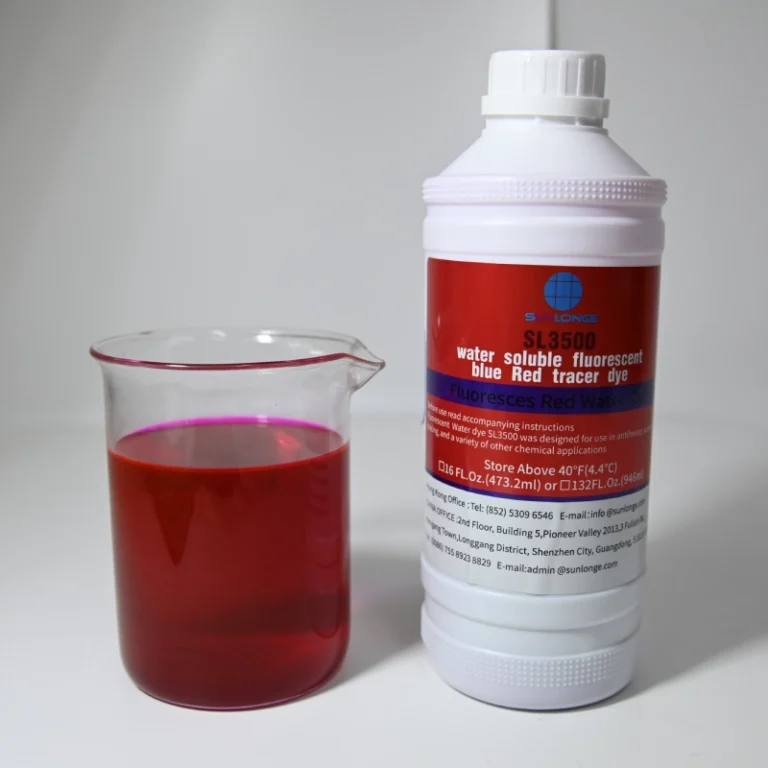
What is SL3500 Water Soluble Rose-Red Fluorescent Tracer Dye?
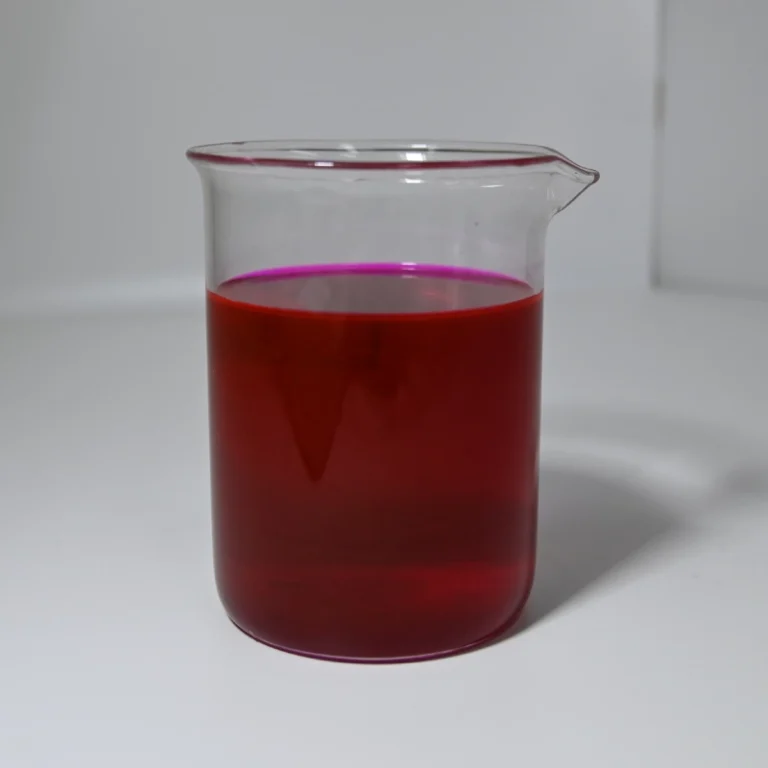
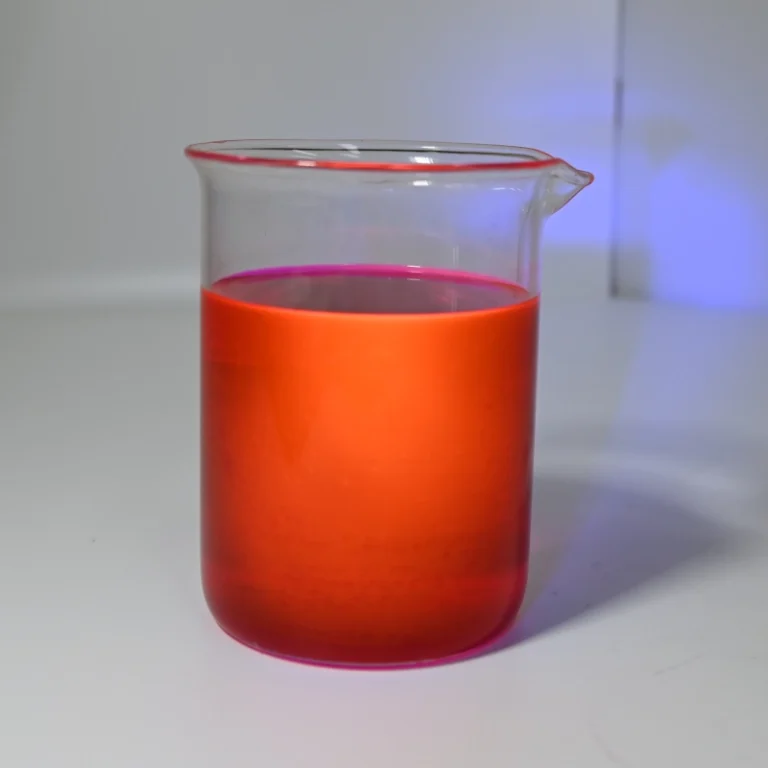
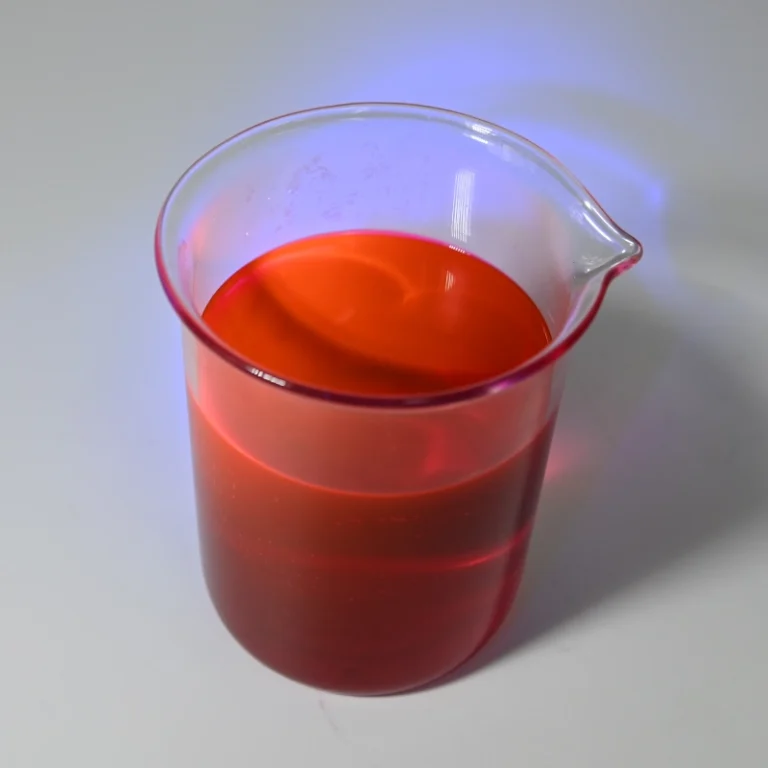
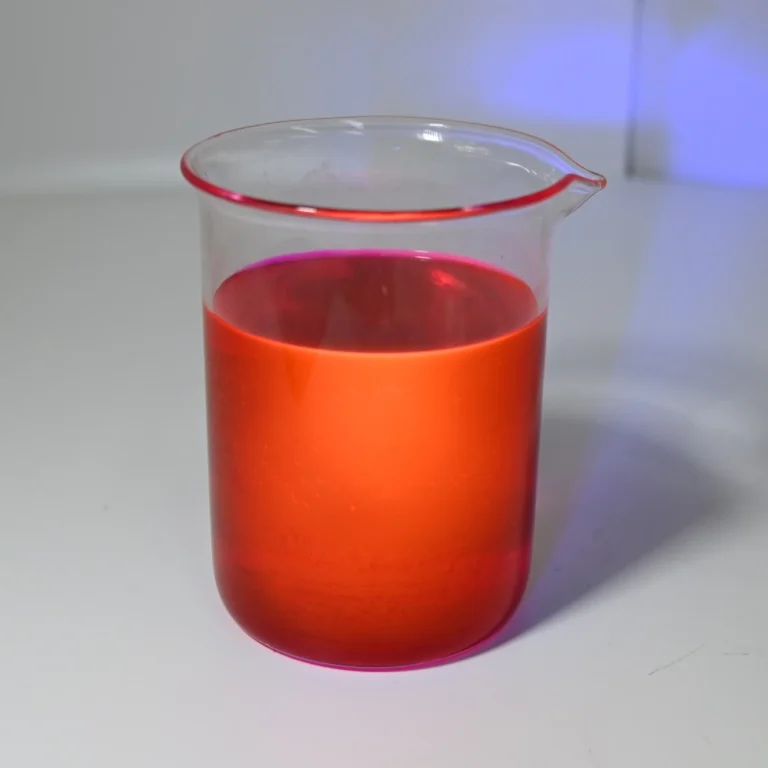
SL3500 Water soluble fluorescent tracer dye is a concentrated water-soluble fluorescent tracer dye containing styrene derivative. SL3500 is a purplish-red liquid when diluted, and is fluorescent purplish-red under UV light. SL3500 is a purplish-red liquid when diluted, and is fluorescent purplish-red under UV light. The product is very good at acid resistance and can be excellent fluorescent properties even at lower or higher PH values; excellent sunlight fastness and fastness to acids/alkali fastness.
Parameter of SL3500 Water Soluble Fluorescent Tracer Dye Typical Property
Content
Data
Suitable wavelength for fluorescence inspection
365NM
Typical usage ratio(L)
0.3—1.0ml
Solubility(Petroleum products)
Insoluble
Solubility (Water)
Fully dissolved
Density(20 °C)
1.10-1.13
Flash Point
>100°C (212°F)
Ionic
Anionic
Stickiness(25C,mPa.S)
≤60
Seal Material Compatibility
All rubber, plastic and metal parts (including concentrated and diluted dye)
Recommended Use Level
The following recommended dosing amounts are starting dosing amounts for typical applications, but the true dosing amount depends on:
UV intensity, fluorescent intensity, background color of the system being spiked, desired fluorescent intensity, and light intensity of the work environment.
Water: 300-500 ppm
Antifreeze: 500-1000 ppm The addition ratio is: 1-1.5/3000: that is,1/2000 (1 liter of tracer dye can be mixed with 2000 liters of water; the price of the tracer dye depends largely on the concentration ratio, SL3500 is a super-concentrated tracer.
Application
Leak detection of roofs/Terraces/Balconies/Floors ects
Leak and infiltration detection of buildings
Water flow testing of wastewater, rainwater and industrial water
Agricultural simulation of diffusion
Search for hydraulic connections between the natural environment and building
Search for leaks in civil engineering: dams, dykes, reservoirs
Search for water infiltration in floors, walls and ceilings
Visual identification and detection of buried pipe connections
Chemical simulation of product dispersion
Leak detection in underfloor heating, glycol cooling circuits