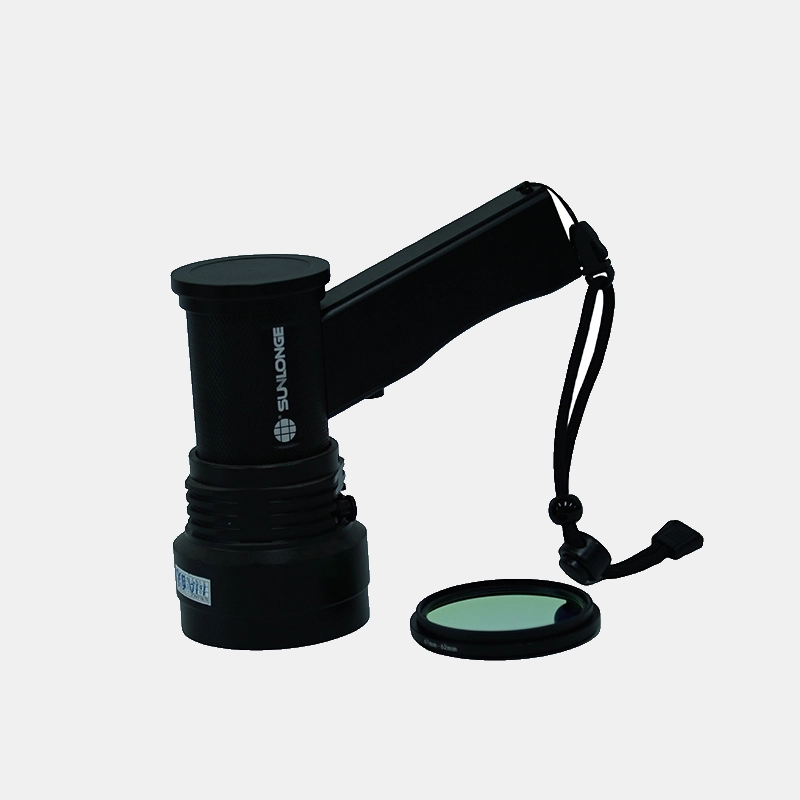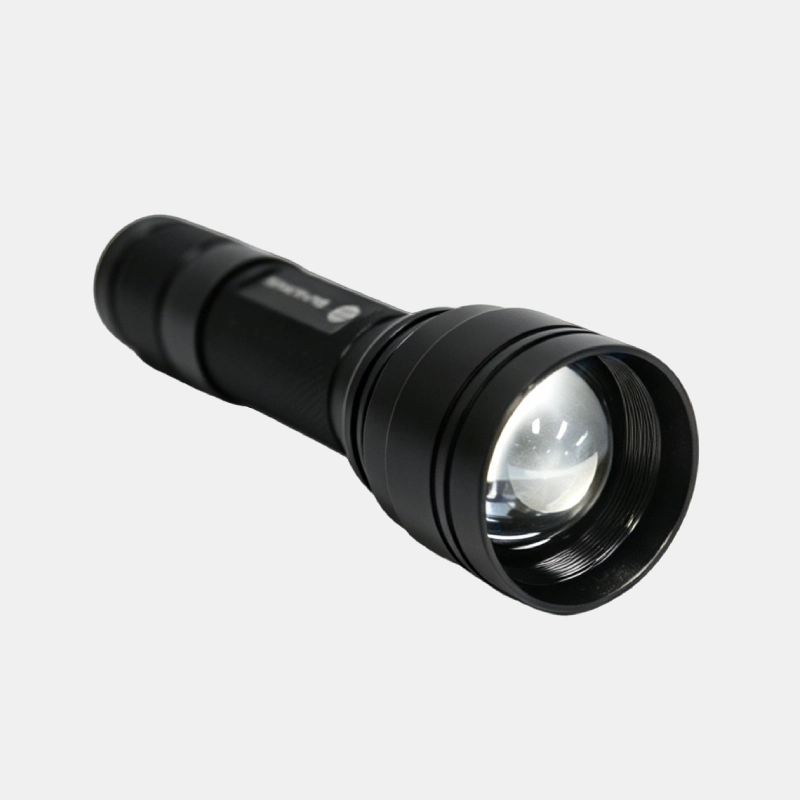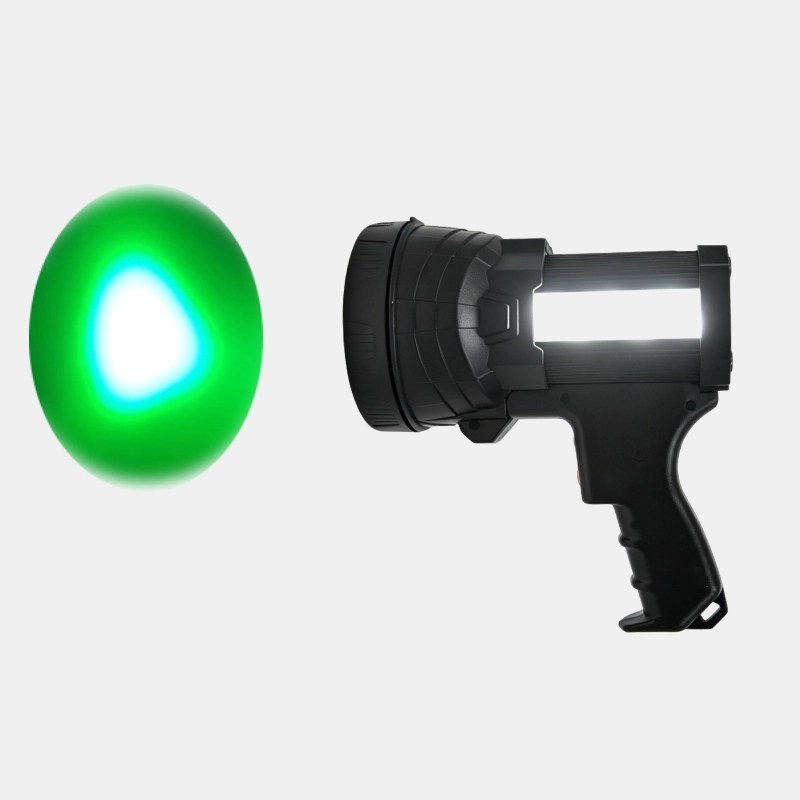
UV leak detection is widely used in HVAC, automotive, industrial maintenance, and quality control because it helps technicians find small leaks faster and with less guesswork. When a fluorescent tracer is added to a system, the right ultraviolet light makes even hard-to-see leaks visible, reducing downtime and helping teams catch problems before they become costly failures.
The best UV wavelength for leak detection is typically 365 nm UVA, because it provides the strongest practical balance of fluorescence excitation, inspection safety, and visibility in most real-world applications.
In the sections below, we’ll explain why 365 nm is preferred, when other wavelengths may be useful, and how to choose the right light for your inspection environment.
Why Is 365 nm Considered the Best UV Wavelength for Leak Detection?
Short answer: 365 nm is usually the best UV wavelength for leak detection because it excites most fluorescent leak tracers efficiently while producing less visible purple light than shorter UV wavelengths.
In practice, the effectiveness of a UV inspection depends on how well the light excites the tracer dye without overwhelming the operator’s eyes with glare. A 365 nm source sits in the UVA range, which is ideal for fluorescence-based inspection. It is strong enough to activate most leak detection dyes used in refrigerant systems, hydraulic equipment, engine compartments, and industrial machinery, yet it remains practical for handheld and portable inspection tools.
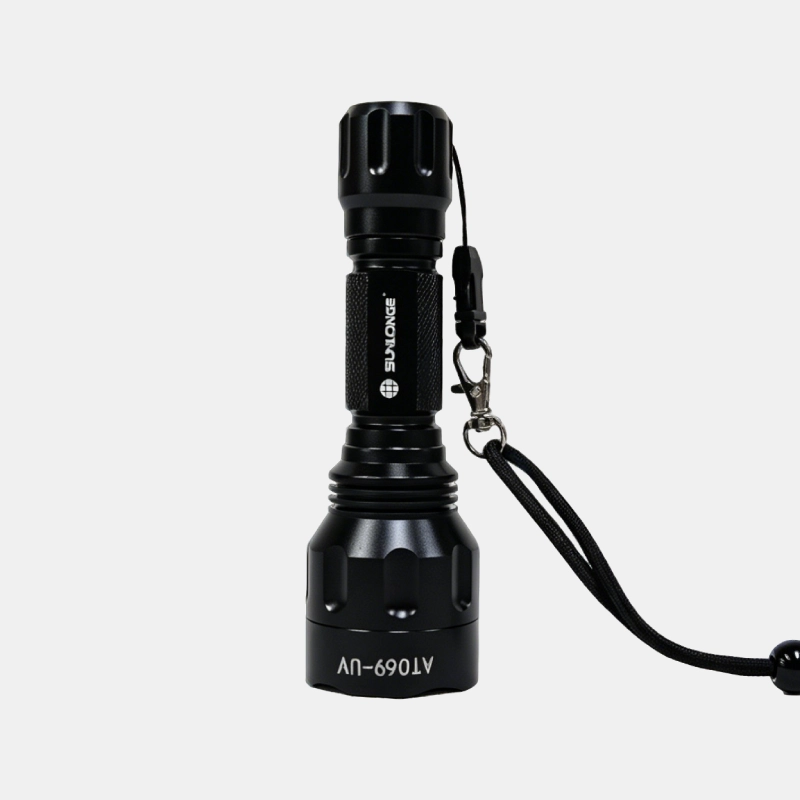
There are three main reasons 365 nm stands out:
-
Strong fluorescence response
Most leak dyes are formulated to respond very well at or near 365 nm, which means brighter, easier-to-see leak spots. -
Better inspection contrast
Shorter UV wavelengths often emit more visible purple/blue light, which can reduce contrast. A 365 nm inspection beam usually makes fluorescence appear cleaner and easier to spot. -
Broad compatibility
Many systems, fluids, and tracer formulations are designed around UVA inspection, so 365 nm works across a wide range of applications.
According to the U.S. Occupational Safety and Health Administration’s general UV exposure guidance, ultraviolet radiation must be used with proper eye and skin protection, even in inspection settings. That is one reason 365 nm is preferred: it delivers useful excitation without requiring the more aggressive tradeoffs associated with lower UV bands. For more on UV radiation basics, see the U.S. EPA’s overview of ultraviolet radiation.
How Does UV Wavelength Affect Leak Detection Performance?
Short answer: The UV wavelength determines how efficiently the tracer fluoresces, how easy the leak is to see, and how much ambient light or glare interferes with the inspection.
Not all UV sources perform the same way. In leak detection, the wavelength must match the absorption characteristics of the tracer dye. If the wavelength is too far from the tracer’s optimal excitation range, the fluorescence may be weak, patchy, or inconsistent. If the wavelength is too short, the inspection may become less comfortable and less visually clean.
Excitation efficiency matters
Fluorescent tracers work by absorbing UV energy and re-emitting visible light. When the UV wavelength is well matched, the leak glows brightly under inspection. If the wavelength is off, the tracer may still fluoresce, but the signal may be dim enough to miss small leaks.
Visible light output affects contrast
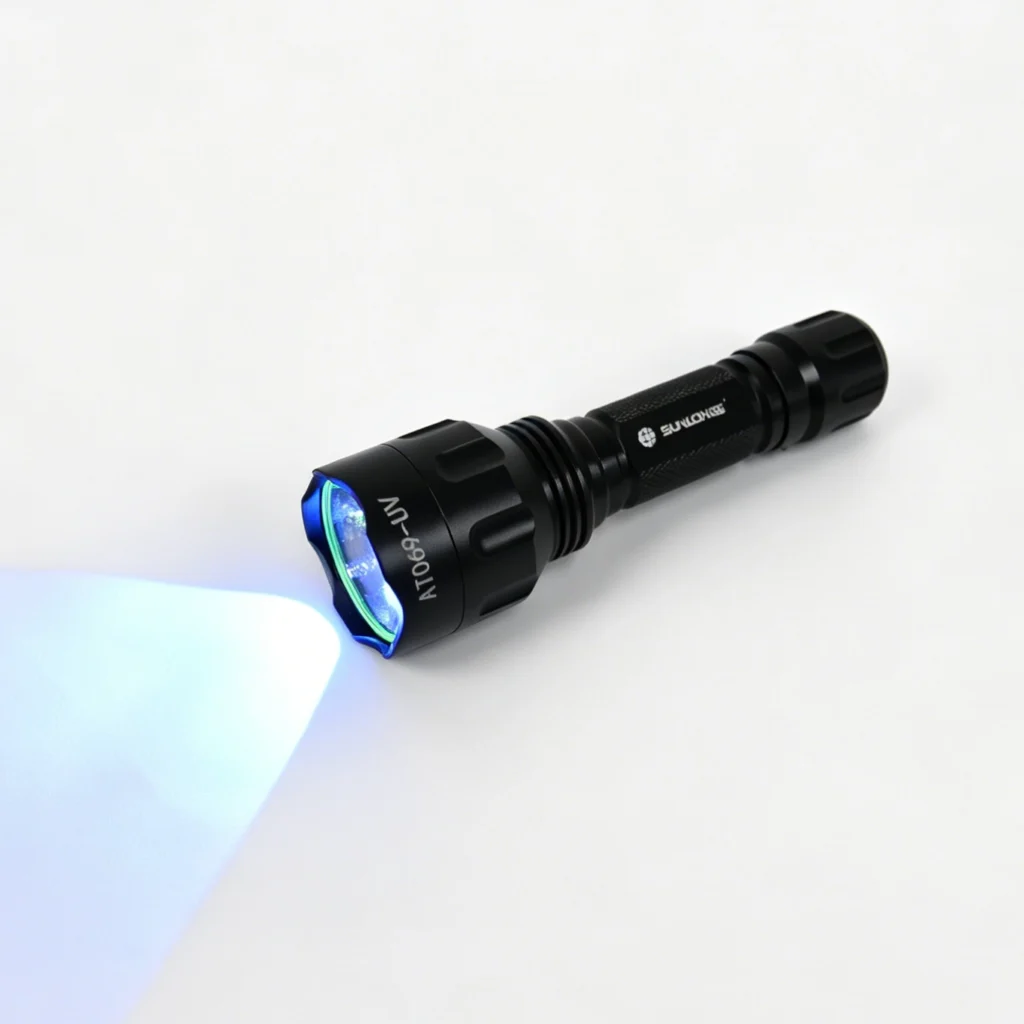
Some UV lights produce more visible violet or blue spill light. While that can make the lamp seem brighter, it can actually reduce the contrast between the fluorescent leak and the background surface. For inspections, a cleaner UV beam is often better than a more “visible” one.
Surface type also changes results
Leak visibility depends not only on wavelength, but also on the material being inspected:
-
Metal surfaces may reflect light and make small leaks harder to isolate
-
Plastic housings can absorb or scatter light differently
-
Porous or dirty surfaces may show background fluorescence and reduce clarity
-
Textured equipment can create shadows that hide small traces
In short, the best wavelength is not only about raw UV intensity. It is about the combination of excitation, contrast, and inspection conditions.
Is 365 nm Always Better Than 395 nm or Other UV Ranges?
Short answer: In most leak detection applications, yes, 365 nm performs better than 395 nm, but 395 nm may still be acceptable when cost, portability, or basic visibility are the main priorities.
A lot of low-cost UV flashlights use 395 nm LEDs because they are common and inexpensive. However, 395 nm sits closer to visible violet light than true UVA inspection light. That means it often produces a brighter-looking beam, but not necessarily a better leak-detection result.
365 nm vs. 395 nm
| Factor | 365 nm | 395 nm |
|---|---|---|
| Fluorescence excitation | Strong | Moderate |
| Visible purple spill | Low | High |
| Leak contrast | Better | Often weaker |
| Best for small leaks | Yes | Less ideal |
| General affordability | Moderate | Often lower |
For professional inspections, 365 nm is typically the better choice because it reveals fine fluorescence more effectively. For casual or low-risk checks, 395 nm may still show obvious leaks, but it is usually less reliable for subtle tracing.
What about even shorter UV wavelengths?
Wavelengths below 365 nm can generate stronger UV energy, but they are generally less practical for field inspection. They may increase safety concerns, require more specialized materials, and are not as commonly matched to leak tracer formulations. For most B2B inspection use cases, the tradeoff is not worth it.
What Factors Should You Consider Besides Wavelength?
Short answer: The best leak detection result depends on wavelength plus light output, optic design, tracer chemistry, inspection distance, and ambient lighting.
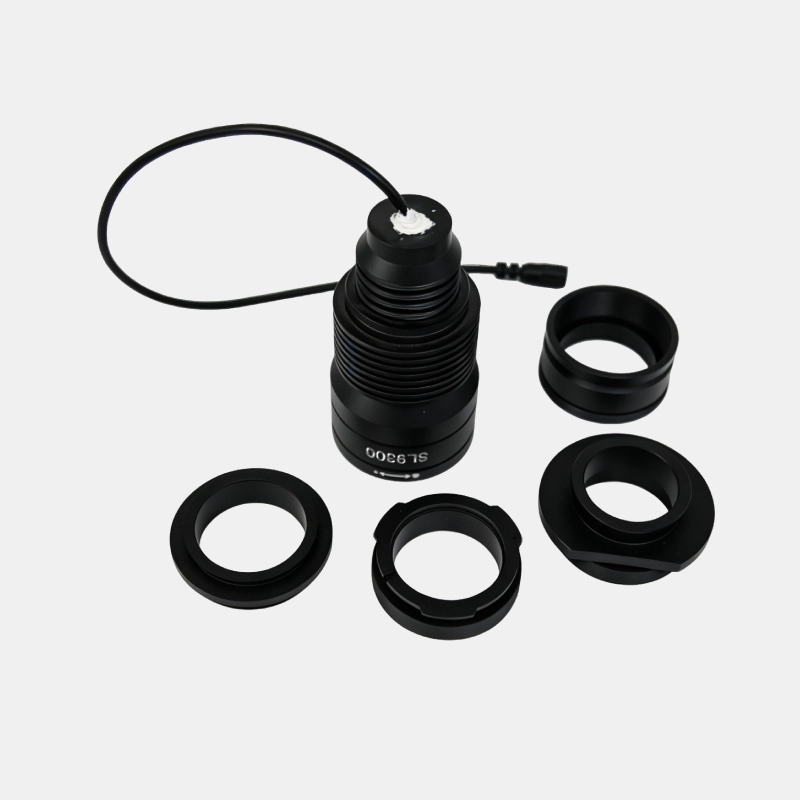
Choosing a UV lamp only by wavelength is a mistake. Two 365 nm lights can perform very differently depending on how the beam is designed and how much UV energy actually reaches the target surface.
1. UV intensity and beam coverage
A strong wavelength is not enough if the beam is too weak or too narrow. You need sufficient irradiance to excite the tracer across the inspection area.
2. Optical filters
Good UV inspection tools often use filters to reduce visible light leakage. This improves contrast and makes fluorescent leaks easier to detect. A filtered 365 nm source often outperforms an unfiltered one, even if both are rated at the same wavelength.
3. Working distance
The farther the lamp is from the surface, the lower the UV energy density at the target. For large equipment or awkward inspection zones, you may need a more powerful source or one with better beam control.
4. Ambient lighting
Leak inspection is always easier in a darker environment. Bright daylight, overhead shop lights, and reflective surroundings can make small leaks harder to see. If you cannot fully darken the area, a high-quality 365 nm source becomes even more important.
5. Tracer compatibility
Different fluorescent dyes may respond best within slightly different UVA ranges. Before standardizing a workflow, verify that your tracer and lamp are matched for the intended system fluid and application.
Where Is 365 nm UV Most Commonly Used?
Short answer: 365 nm is widely used in HVAC, refrigeration, automotive diagnostics, manufacturing, and preventive maintenance because it works well across many fluorescent inspection tasks.
Leak detection is not a single-use case. It appears in many industries where fluid loss, contamination, or seal failure can lead to downtime, safety risks, or warranty claims.
HVAC and refrigeration
Technicians use fluorescent tracers to find refrigerant leaks in evaporators, condensers, fittings, and service ports. In these systems, 365 nm provides a dependable balance of brightness and portability.

Automotive and heavy equipment
Engine bays, hydraulic systems, transmissions, and cooling systems often benefit from UV inspection. The ability to inspect in cramped or dirty spaces makes a reliable 365 nm source especially valuable.
Industrial maintenance
Facilities rely on fluorescent leak detection to identify process fluid losses, lubrication issues, and equipment wear. In large plants, a consistent UV wavelength helps standardize inspection results across teams.
Quality assurance and production
Manufacturers may use fluorescent inspection to verify sealing performance, detect seepage, or confirm that components are not leaking after assembly. In these cases, repeatable wavelength performance matters as much as brightness.
How Do You Choose the Right UV Light for Your Workflow?
Short answer: Choose a 365 nm inspection light with enough intensity, good filtration, and a beam pattern suited to your work area.
A practical purchasing decision should focus on performance in the field, not just specifications on paper. If your goal is to identify small or intermittent leaks, the light should deliver stable UVA output and strong fluorescence contrast.
Consider the following checklist:
-
Target wavelength: prioritize 365 nm for professional leak detection
-
Beam quality: look for even coverage and minimal visible spill
-
Filter performance: better filtering usually means better contrast
-
Portability: handheld tools work well for spot checks
-
Durability: choose a light suitable for the environment
-
Inspection conditions: match the light to your workspace size and ambient lighting
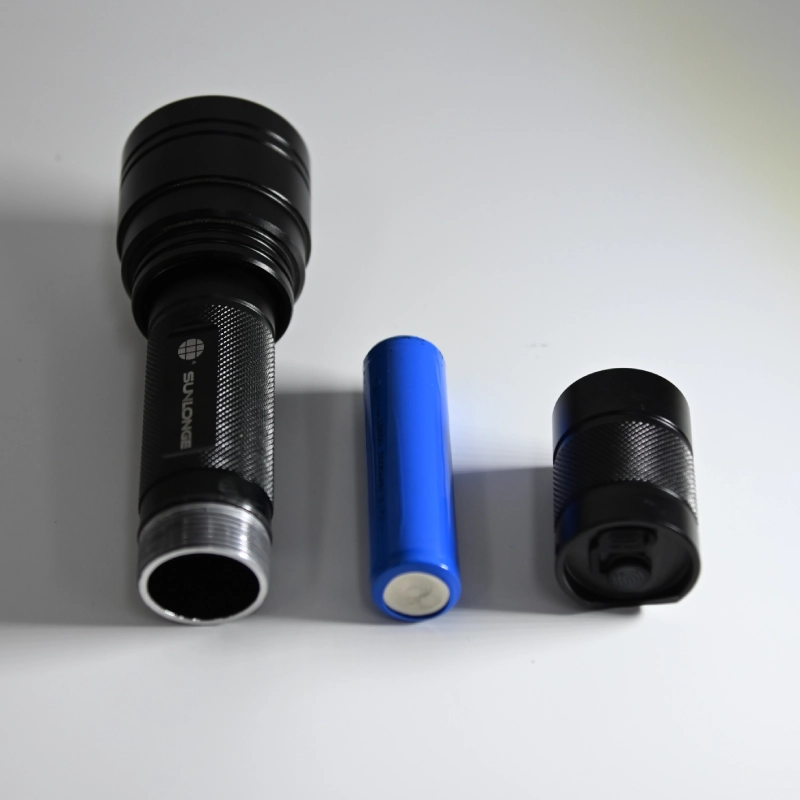
If your team is building a repeatable inspection process, it helps to standardize both tracer type and UV source. For organizations looking for a dedicated solution, the right UV Leak Detection Light can improve consistency and reduce missed defects.
What Are the Best Practices for Reliable UV Leak Detection?
Short answer: Use the correct tracer, darken the area when possible, inspect systematically, and verify findings under consistent lighting conditions.
Even with the best wavelength, results depend on how the inspection is performed. A disciplined process makes leak detection faster and more dependable.
Prepare the surface
Whenever possible, clean the area before inspection. Dirt, oil, and old residue can mask fluorescence or create false positives.
Use a consistent scanning pattern
Move the light slowly and cover the entire target area. Rushing often causes technicians to miss thin traces or small pooling points.
Observe from multiple angles
Some leaks appear only when the lamp is repositioned. Inspect from different sides to pick up reflections and hidden areas.
Document findings
Photographs can help support maintenance records, warranty claims, and repair planning. Consistent lighting makes documentation more useful.
Confirm after repair
After fixing the leak, repeat the inspection to make sure no fluorescence remains. This helps verify that the repair was effective.
When Should a Different Wavelength Be Considered?
Short answer: A different wavelength may be useful if your tracer chemistry, inspection distance, or application constraints do not work well with standard 365 nm UVA.
Although 365 nm is the best general-purpose choice, not every scenario is identical. Some specialized dyes or systems may perform differently, and some environments may favor alternative sources. For example, if a worksite has an unusual coating, very high ambient light, or a custom tracer formulation, you may need to test a few options before locking in a standard.
Still, for the majority of professional leak detection applications, 365 nm remains the benchmark because it offers the best combination of fluorescence strength, usability, and inspection clarity.
FAQ
Is a stronger UV light always better for leak detection?
No. Stronger output helps only if the wavelength matches the tracer and the beam quality is good. A poorly filtered or mismatched light can perform worse than a well-designed 365 nm source.
Can leak detection work in daylight?
Yes, but results are usually better in dim conditions. Daylight and bright shop lighting reduce contrast, so a higher-quality UV source and closer inspection distance become more important.
How do I know if my tracer is compatible with 365 nm?
Check the tracer’s technical data sheet or test it under controlled conditions. Most fluorescent leak tracers are designed for UVA inspection, with 365 nm being the most common and effective starting point.
Final Recommendation
For most professional leak detection tasks, 365 nm UVA is the best UV wavelength. It gives you strong tracer excitation, better contrast, and broad compatibility across common maintenance and inspection workflows. If you want reliable results, focus not just on wavelength, but also on beam quality, filtration, tracer match, and inspection conditions.