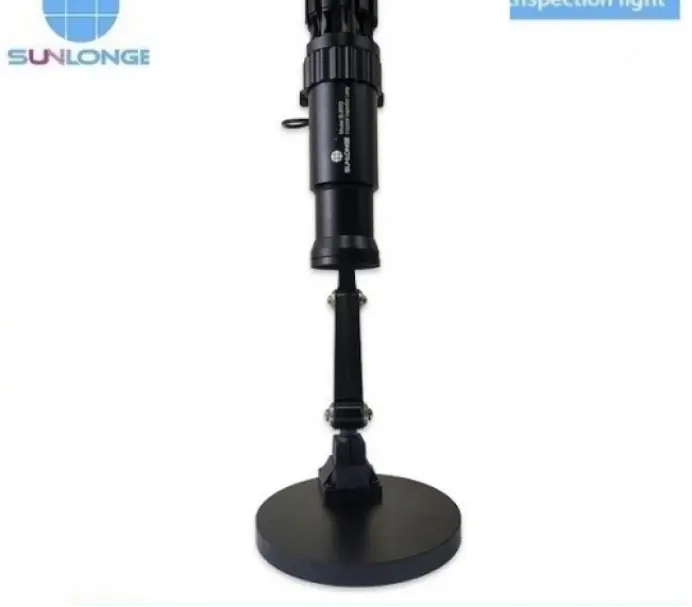
A technician who cannot see the leak is a technician guessing at the repair. Every minute spent tracing refrigerant lines with a soap bottle or chasing false positives from an electronic sniffer is a minute the bay stays occupied and the next job waits. A proper UV inspection lamp solves this. It turns an invisible refrigerant leak into a glowing yellow-green stain that is impossible to miss, even in broad daylight with the hood open.
The right UV inspection lamp for automotive and HVAC work operates at 365 nm wavelength, delivers enough intensity to make dye fluoresce clearly in ambient light, and fits the technician’s workflow, whether that means a compact handheld flashlight or a wide-area overhead lamp for inspecting large assemblies.
This guide covers what to look for and what to avoid.
Why do automotive and HVAC technicians need a UV inspection lamp?
UV inspection lamps are the primary tool for finding refrigerant, oil, and coolant leaks in automotive and HVAC systems. The lamp excites fluorescent dye that has been injected into the system, making the leak point glow bright yellow-green against dark metal, plastic, and rubber surfaces.
Leak detection in automotive HVAC systems is not optional. A car that leaves the shop with an undiagnosed evaporator leak comes back in two weeks with the same complaint and an angry customer. The evaporator alone is a 4 to 6 hour job on most vehicles because it sits inside the dashboard. If the technician replaces the condenser because the sniffer beeped near it, but the real leak was a pinhole in the evaporator, the customer pays twice and the shop loses credibility.
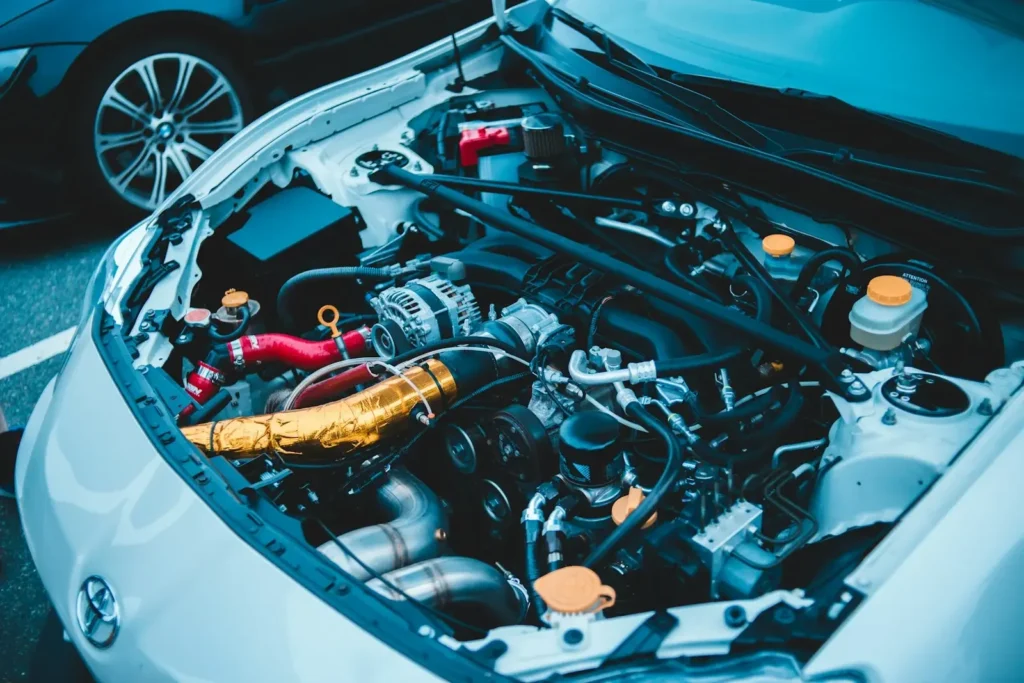
The same logic applies to commercial HVAC. A rooftop chiller with a slow refrigerant leak can run for a season before the low charge trips a safety shutdown, but the energy cost of running undercharged for months is far higher than the repair. A UV inspection lamp lets the technician pinpoint the leak during scheduled maintenance and fix it on the spot.
Beyond leak detection, UV lamps are used in NDT inspections for weld and casting defects, in surface inspection for semiconductor wafers and precision parts, and in bioscience labs for gel imaging and contamination checks. The core requirement is the same across all these applications: a bright, clean UV output at the correct wavelength.
What wavelength should a UV inspection lamp use?
A UV inspection lamp for leak detection should operate at 365 nm. This is the peak excitation wavelength for most fluorescent leak detection dyes. Lamps at 395 nm will also produce fluorescence, but with significantly lower brightness, making small leaks harder to spot.
The difference between 365 nm and 395 nm is not subtle. The absorption curve of automotive HVAC dye drops by roughly 60 percent between 365 nm and 395 nm. A leak that glows like a neon sign under a 365 nm lamp becomes a faint smudge under a 395 nm lamp. In a dark engine bay this might still be visible. Under shop lights or in sunlight, it disappears.
NDT UV lamps have even stricter wavelength requirements. ASTM E3022 and similar standards specify a peak wavelength of 365 nm with a narrow tolerance band. This ensures consistent inspection results across different lamps and different operators. If the lamp output drifts outside the specified range, the dye may not fluoresce at all, producing a false negative on a critical weld inspection.
UV-A vs. UV-C: what matters for safety and performance
All UV inspection lamps for leak detection use UV-A (315-400 nm). This is the safest band of ultraviolet light for regular occupational exposure. UV-B and UV-C are shorter wavelengths that cause skin burns and eye damage, which is why germicidal lamps and welding arcs require protective barriers.
UV-A still requires basic safety precautions. Prolonged direct exposure can cause skin aging and eye strain. The yellow contrast glasses that come with most inspection lamp kits are not just for visibility. They also block reflected UV-A from reaching the eyes. Technicians who skip the glasses because they “can see the dye fine without them” are exposing their eyes to unnecessary UV each time they use the lamp.
Single vs. multi-wavelength lamps
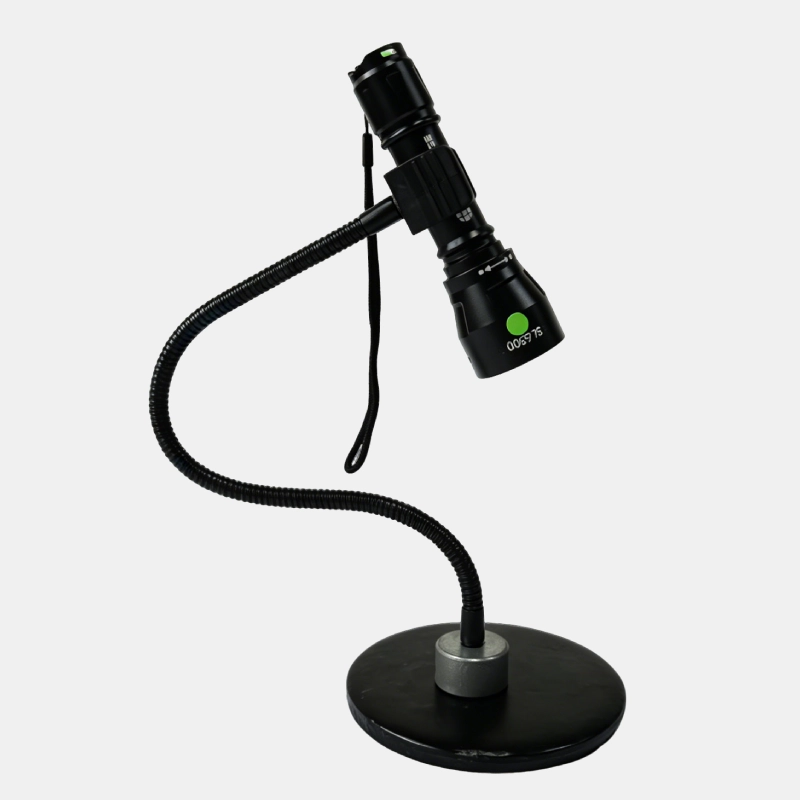
Some inspection lamps now offer dual or triple wavelength output, switching between UV-A at 365 nm, blue light at 455 nm, and sometimes green at 525 nm. A multi-wavelength lamp is useful if the technician works across multiple inspection methods. Blue light excites a different set of fluorescent penetrants used in certain NDT applications. Green light is used for surface defect inspection where UV would wash out the detail on polished metal or coated surfaces.
For a technician who only does refrigerant leak detection, a single-wavelength 365 nm lamp is the right choice. Paying extra for wavelengths you will never use adds cost and complexity with no benefit. If the work expands into NDT or surface inspection later, buy the right lamp for that task at that time.
What types of UV inspection lamps are available?
UV inspection lamps fall into three main form factors: handheld flashlights for portable spot inspection, desktop or overhead lamps for stationary workstation use, and wide-area flood lamps for inspecting large assemblies or multiple components at once.
Handheld flashlights
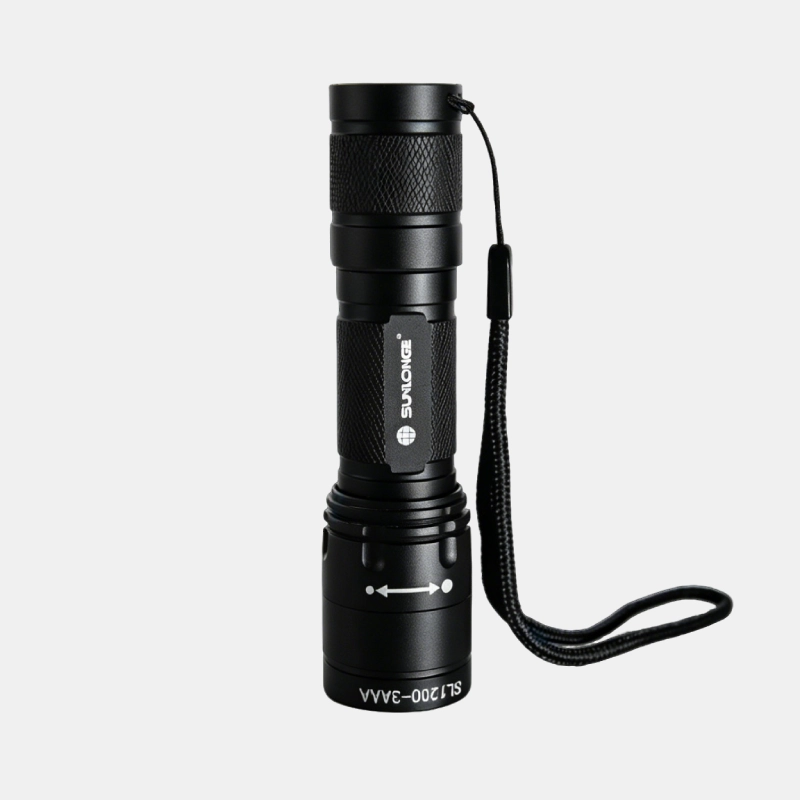
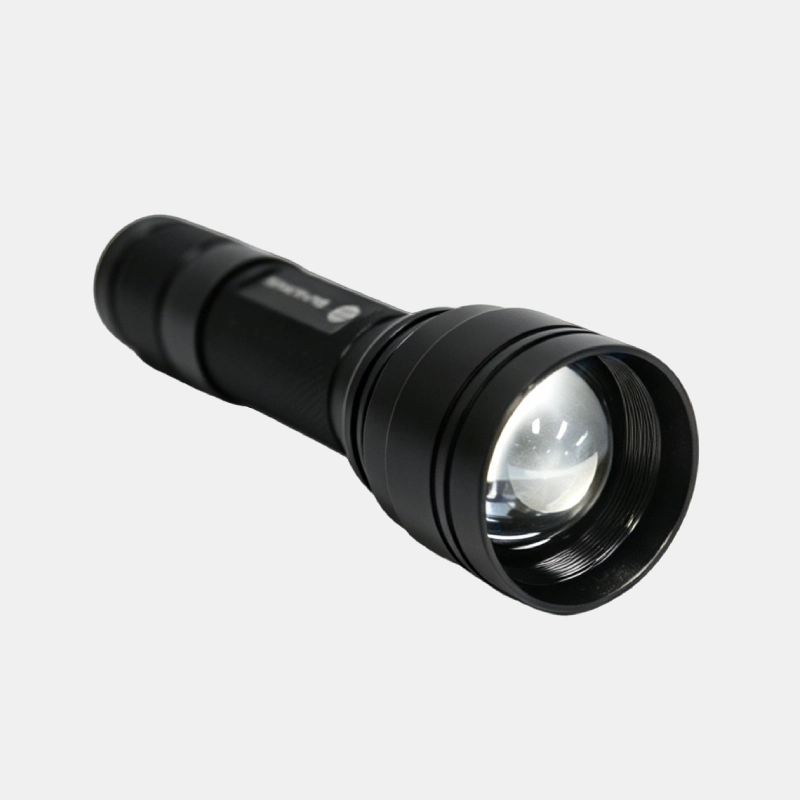
A handheld inspection lamp is the most common type for automotive and field HVAC work. It runs on rechargeable lithium batteries, weighs under a pound, and fits in a tool bag. The best units use a single high-output LED behind a Woods glass filter that passes 365 nm UV while blocking most visible light. Visible light spill, often called “purple haze,” washes out the fluorescence and makes the lamp look bright but perform poorly.
Look for a handheld lamp with at least 3 watts of UV LED output. Less than that and you will struggle to see dye on the evaporator drain or inside the condenser fins where ambient light does not reach. Units under 1 watt are toy-grade and not suitable for professional work.
Portable work lights
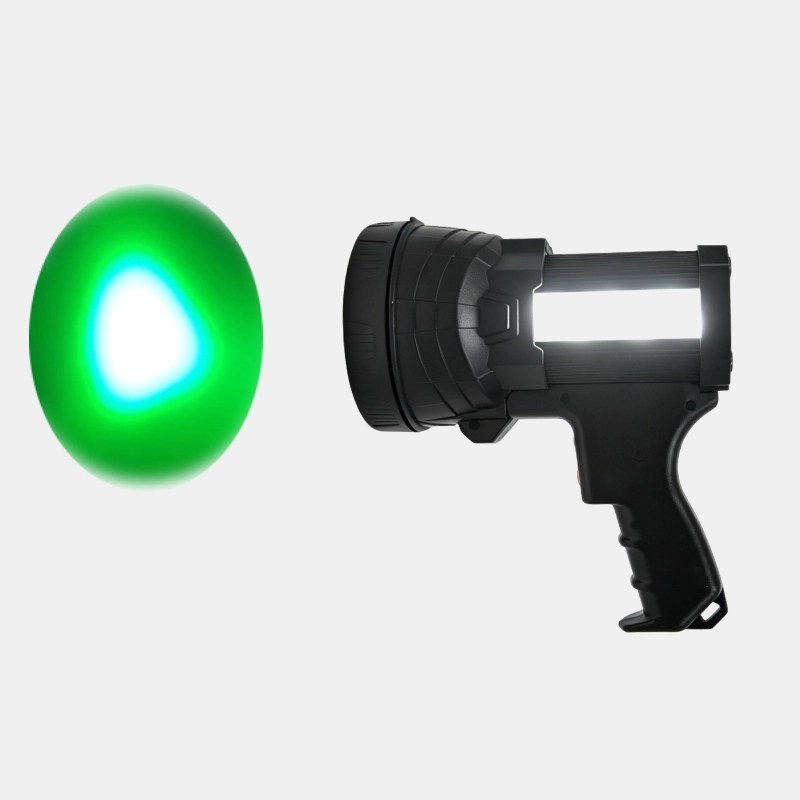
A portable UV LED lamp bridges the gap between a handheld flashlight and a mounted fixture. These are larger units with a pistol grip or stand, running on either a rechargeable battery pack or a corded power supply. They produce a wider beam and higher total UV output than a flashlight, making them better for inspecting an entire engine compartment or a rooftop HVAC unit in one sweep.
The tradeoff is portability and cost. A portable work light weighs 2 to 5 pounds and costs more than a flashlight. For a technician who does 90 percent of their work under a car hood or inside an air handler cabinet, a good flashlight is usually the better choice. For a shop that does large commercial chillers or industrial NDT inspections, the portable work light pays for itself in inspection speed.
Desktop and overhead lamps
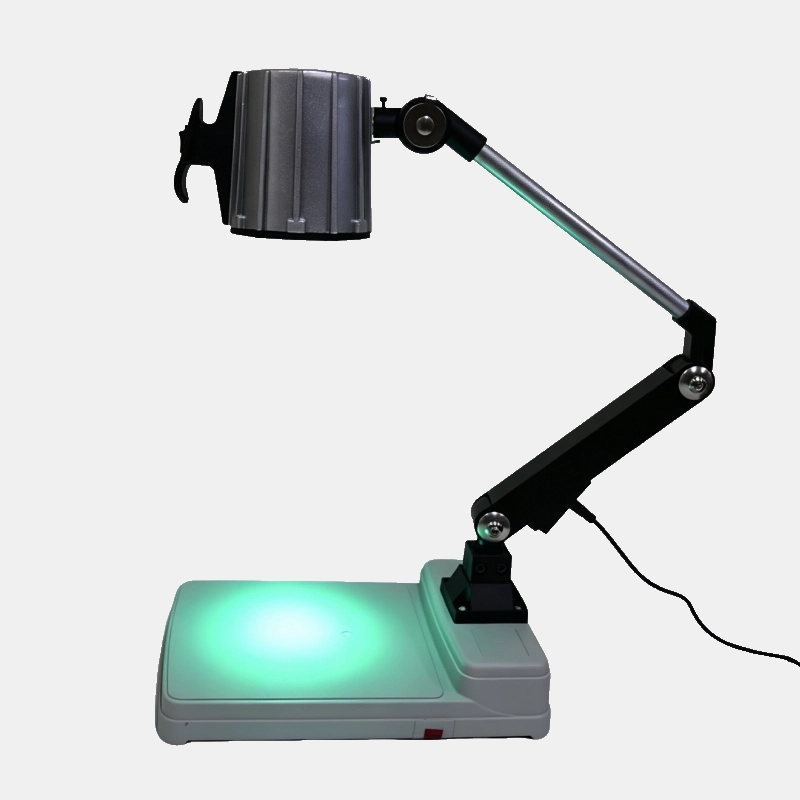
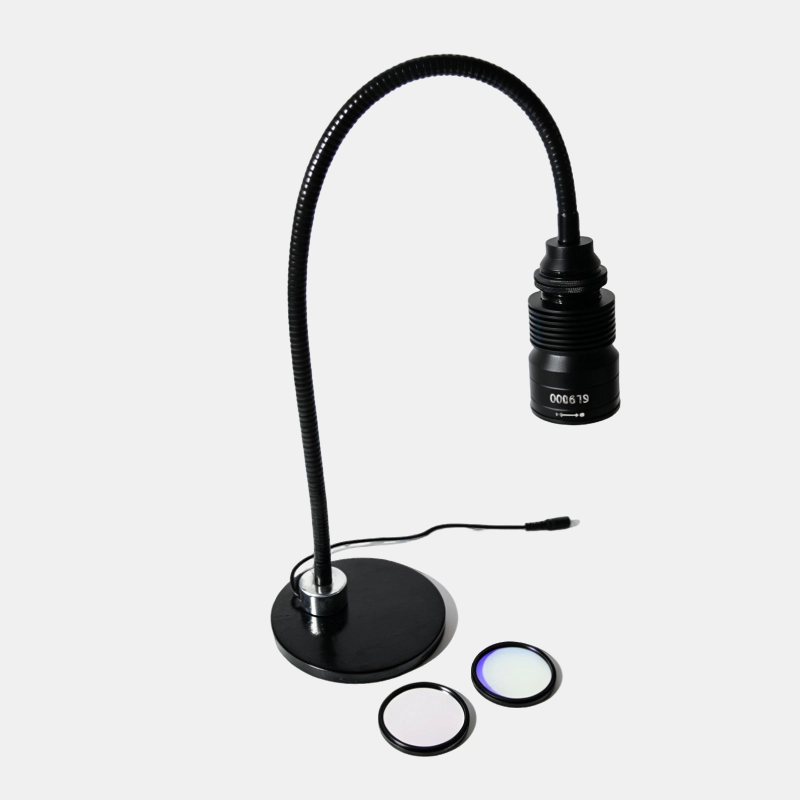
Desktop inspection lamps are fixed-mount units used in labs, cleanrooms, and production lines. They sit on a bench or clamp to a shelf, and the technician brings the part to the light rather than the other way around. These are common in semiconductor wafer inspection, PCB quality control, and bioscience gel documentation.
Overhead UV lamps are the large-format version, suspended from the ceiling or mounted on an articulated arm. They flood a workstation with UV-A and allow hands-free inspection. These are not relevant for automotive or HVAC field work but dominate in manufacturing and laboratory settings.
| Lamp type | Best for | Typical price range |
|---|---|---|
| Handheld flashlight | Automotive AC, residential HVAC, field work | $50 - $150 |
| Portable work light | Commercial HVAC, engine bay sweeps, NDT | $150 - $400 |
| Desktop lamp | Lab work, PCB inspection, wafer inspection | $200 - $800 |
| Overhead lamp | Production lines, cleanrooms | $500 - $2,000+ |
What factors should you consider when buying a UV inspection lamp?
The five key factors are wavelength accuracy, output intensity, filter quality, battery life and power source, and build durability. Any one of these being wrong makes the lamp a frustration instead of a tool.
Wavelength accuracy
A lamp advertised as “UV” without specifying the wavelength in nanometers is almost certainly a 395 nm unit with an LED that costs a few cents. UV-A light for NDT applications requires 365 nm. Automotive leak detection dye works at both 365 nm and 395 nm, but with a major performance gap. If the product listing does not state the wavelength in nanometers, assume it is 395 nm and move on.
Output intensity
Intensity matters more than most buyers realize. A lamp that produces 3,000 microwatts per square centimeter at 15 inches will make dye glow visibly in a brightly lit shop. A lamp that produces 500 microwatts per square centimeter at the same distance will only work in near darkness. The difference in price between these two lamps is often less than $40. Paying for output is almost always the right decision.
Intensity drops with distance following the inverse square law. Double the distance and intensity drops to one quarter. A lamp rated at 5,000 uW/cm2 at 15 inches delivers only about 1,250 uW/cm2 at 30 inches. If you work on large chillers where the lamp may be 3 to 4 feet from the component, factor this in.
Filter quality
The filter is an optical glass element, usually made from Woods glass or a similar material that transmits UV-A while absorbing visible light. A high-quality filter appears nearly black when the lamp is off and deep violet when on. A poor filter lets through blue and purple visible light that competes with the yellow-green fluorescence from the dye.
Filter quality correlates strongly with price. A $30 lamp has no filter at all, just a bare UV LED behind a plastic lens. A $100 lamp has a real glass filter. The first time you use a filtered lamp, you will wonder how you ever found leaks with the unfiltered one.
Battery life and power source
Handheld lamps run on a single 18650 or 21700 lithium cell, or an integrated battery pack. Runtime at full power ranges from 1.5 to 4 hours depending on output and battery capacity. A lamp that uses a standard removable cell has an advantage: you can carry a spare battery and swap it in seconds instead of waiting for the lamp to recharge.
Avoid lamps that use AA or AAA alkaline batteries. The voltage sag under load is too steep and the runtime is too short for professional use. A lamp that promises “3 hours on 3 AA batteries” is delivering a fraction of its rated output after the first 20 minutes.
Build quality
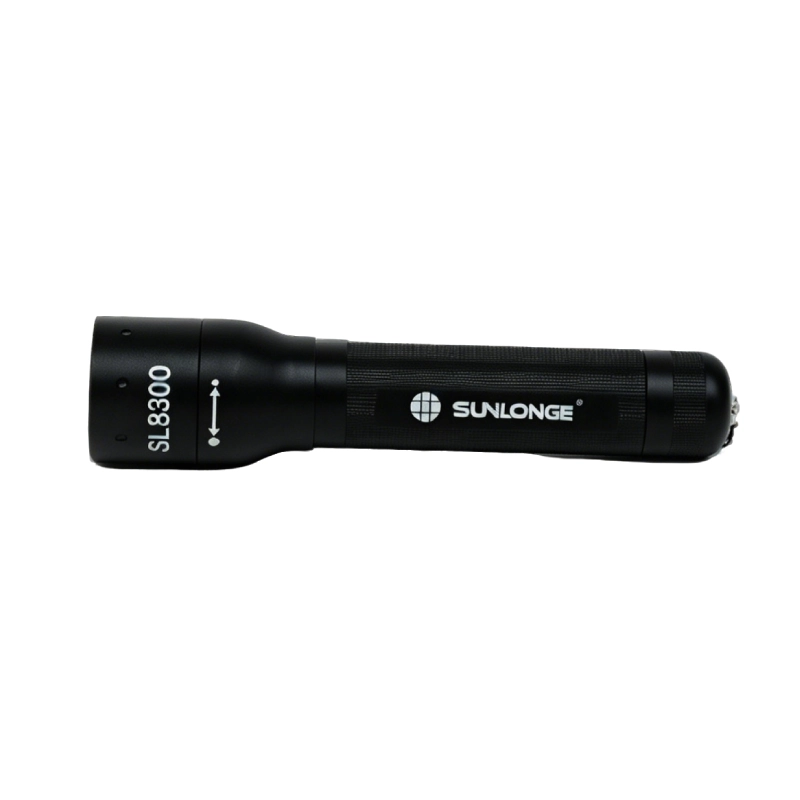
A leak detection lamp lives in a tool bag, gets dropped on concrete, and is used with greasy hands. The housing should be aluminum or reinforced polymer, not thin plastic. The switch should be recessed or guarded to prevent accidental activation in the bag. O-ring seals at the battery cap and lens ring keep dust and moisture out. A lamp that cannot survive a 3-foot drop onto a shop floor is not a professional tool.
Other factors worth checking:
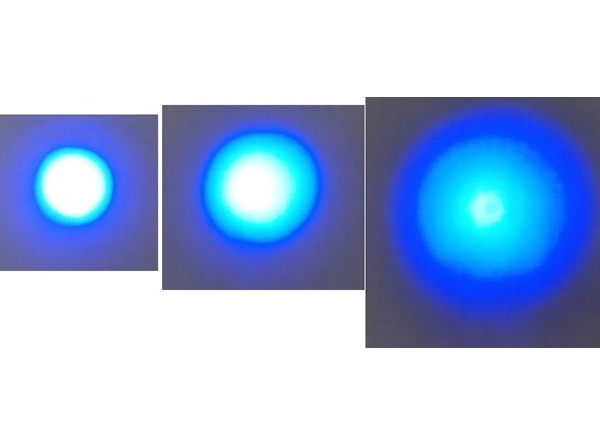
- Beam pattern. A tight spot beam helps find pinhole leaks. A wider flood beam covers more area and is better for general scanning. Some lamps have a zoom mechanism, but this adds complexity and failure points.
- Weight and balance. You will hold this lamp for 15 to 30 minutes at a time. A head-heavy lamp strains the wrist.
- Warranty. A lamp used daily in a shop environment should carry at least a one-year warranty against defects.
How much should you spend on a UV inspection lamp?
A professional-grade handheld UV inspection lamp costs between $80 and $150. Spending less than $50 gets you a 395 nm LED with no filter and poor build quality. Spending more than $200 gets you into portable work light territory, which is overkill for most automotive and HVAC technicians.
The UV leak detection light market has a wide range. Here is what you get at each price tier.
| Price tier | What you get | Who it is for |
|---|---|---|
| Under $30 | 395 nm LED, no filter, plastic body, alkaline batteries | Not recommended for professional use |
| $30 - $60 | 365 nm LED, basic filter, aluminum body, integrated battery | DIY users, occasional use |
| $80 - $150 | 365 nm LED, quality glass filter, aluminum body, removable 18650/21700 cell | Professional automotive and HVAC technicians |
| $150 - $250 | Higher output LED, premium filter, longer runtime, ruggedized housing | Heavy daily use, commercial HVAC |
| $250+ | Portable work light format, wide beam, highest output | Industrial NDT, large system inspection |
The $80 to $150 tier is the sweet spot. It gets you a lamp that will find every leak a shop encounters, last 2 to 3 years of daily use, and not make you wish you had spent more. The most common mistake is buying a $40 lamp, struggling with it for six months, and then buying the $100 lamp anyway. The $40 becomes a drawer light, and the total cost is $140 instead of $100.
A yellow contrast glasses kit should come with the lamp. If the lamp does not include glasses, budget an extra $15 to $25. Some glasses are better than others. Look for glasses that block both UV-A and the blue-purple visible light spill. Glasses that only have a yellow tint without UV blocking are cosmetic.
How to maintain and get the most from your UV inspection lamp
Keep the filter clean, charge the battery after each use, and store the lamp in its case away from heat. A dirty filter cuts output by 30 percent or more, and a battery stored at full discharge loses capacity permanently.
Filter care
The filter glass collects oil, dust, and dye residue from every job. A thin film of grime absorbs UV light before it reaches the target. Wipe the filter with a microfiber cloth after each job and clean it with lens cleaner once a week. Do not use shop rags, which leave lint and can scratch the glass. Do not use brake cleaner or carb spray on the filter, as some solvents attack the optical coating.
Battery habits
Lithium cells degrade fastest when stored at full discharge or full charge in high heat. The ideal storage charge is roughly 40 to 60 percent. If the lamp will sit unused for more than a week, charge it to two out of four indicator bars and remove the battery from the lamp if the design allows it. Leaving a fully charged battery inside a lamp in a hot service van all summer shortens its lifespan by half.
When to retire a lamp
UV LED output degrades slowly over time. A lamp rated for 30,000 hours at 70 percent output will still work at 50,000 hours, but the dye will be harder to see. If you find yourself leaning in closer to the target than you used to, or needing to dim the shop lights to spot leaks that used to be obvious, the LED has aged. Replacing the lamp is more cost-effective than spending an extra 5 minutes per job squinting at every joint.
An auto fluorescent leak detection lamp with a quality LED and filter will give 3 to 5 years of daily service before noticeable output loss. Lamps used less frequently last proportionally longer. The LED itself rarely fails completely. It just gets dimmer until it no longer meets the job’s requirements.
Conclusion
A UV inspection lamp is one of those tools where the gap between a cheap one and a good one is wider than the gap between a good one and a great one. Spend the extra $50 to get a 365 nm LED behind a real glass filter, powered by a removable lithium cell, in an aluminum housing. It will find leaks faster, work in brighter conditions, and last years longer than the budget alternative.
For automotive technicians, the lamp pays for itself the first time it finds an evaporator leak without pulling the dashboard. For HVAC technicians, it pays for itself the first time it prevents a callback on a system that another method misdiagnosed.
FAQ
Can I use the same UV lamp for automotive AC and residential HVAC systems?
Yes. The dye chemistry is the same and the lamp requirements are identical. The only difference is access. A residential HVAC air handler cabinet is larger than a car engine bay, so a lamp with a wider beam pattern helps. A handheld flashlight still works, but you may need to sweep it across a larger area.
What is the difference between a UV leak detection lamp and a blacklight party lamp?
A party blacklight is typically a 395 nm fluorescent tube or LED with no filter, designed to make white clothing and fluorescent posters glow in a dark room. It produces visible purple light in addition to UV-A. A leak detection lamp operates at 365 nm with an optical filter that blocks visible light, and it produces much higher UV intensity. You cannot use a party blacklight for leak detection. The dye will barely fluoresce and you will see nothing.
How do I test if my lamp is still producing enough UV output?
The simplest field test is to put a drop of fluorescent dye on a clean white paper towel, let it dry, then shine the lamp at it from your typical working distance in normal shop lighting. If the dried dye spot glows bright yellow-green and is immediately obvious, the lamp is fine. If you have to dim the lights and squint to see it, the lamp has degraded and should be replaced. For quantitative testing, UV radiometers are available, but they cost more than most handheld lamps and are not practical for a working technician.