A single undetected leak can cost a manufacturing facility hundreds of thousands of dollars in lost product, downtime, and equipment damage each year. In HVAC systems, a refrigerant leak as small as 10% of total charge drops system efficiency by up to 20%, driving energy bills higher while the underlying problem remains invisible to the naked eye.
Across industrial plants, commercial buildings, and municipal infrastructure, leaks are not just a maintenance nuisance. They represent a direct threat to operational continuity, regulatory compliance, and bottom-line performance. The question is not whether leaks will occur — they will. The question is how fast you can find them and how accurately you can pinpoint the source.
The three primary types of leak detection used across industries today are acoustic leak detection, infrared thermography, and pressure testing. Each method operates on a distinct physical principle — sound, heat, and pressure change — and each is best suited to specific system types, operating conditions, and inspection goals. Most professional inspection teams do not rely on a single method. They combine two or more of these technologies depending on the material, access constraints, and required sensitivity.
Selecting the right detection approach involves understanding what each method actually measures, where it performs best, and what its practical limitations are in real field conditions. This article breaks down all three core methods, then covers complementary technologies that round out a complete inspection toolkit.
Acoustic Leak Detection
Acoustic leak detection identifies leaks by capturing the sound waves produced when pressurized fluid or gas escapes through a crack, joint failure, or corrosion hole. Specialized sensors and ground microphones pick up these acoustic signatures and allow technicians to pinpoint the leak location without any excavation or system disassembly.
The core principle is straightforward. When a pressurized system develops a leak, the escaping medium generates sound across a range of frequencies. Water spraying from a pinhole in a high-pressure pipe produces a hiss in the 1 kHz to 8 kHz range. Gas leaks under lower pressure generate lower-frequency rumbles. The specific acoustic signature — frequency, amplitude, and pattern — depends on the pipe material, the fluid or gas type, the pressure differential, and the geometry of the leak opening.
Modern acoustic detection equipment uses highly sensitive piezoelectric sensors coupled with digital signal processing. Technicians place contact sensors directly on pipe walls, valves, or hydrants, or use ground microphones to scan above buried lines. The system correlates signals arriving at two or more sensor locations to calculate the distance to the leak point based on sound travel time through the pipe material. Cross-correlation algorithms can achieve location accuracy within 6 to 12 inches in optimal conditions.
Where Acoustic Detection Works Best
This method performs exceptionally well on pressurized water mains, gas distribution lines, and steam systems. Municipal water utilities use acoustic plumbing leak detection surveys to monitor underground networks spanning hundreds of miles, often detecting leaks before they surface as visible water. Oil and gas pipeline operators deploy inline acoustic sensor arrays for continuous monitoring of long-distance transmission lines.
Practical Limitations
Background noise is the primary enemy of acoustic detection. Busy urban environments with traffic, construction, and industrial machinery generate competing sound signatures that can mask leak signals. The method also requires the system to be under pressure — depressurized or gravity-drain lines will not produce detectable acoustic emissions. Very slow seeps with minimal pressure drop may generate signals too weak for reliable detection. Pipe material matters as well: cast iron and PVC dampen acoustic transmission more than steel or copper, reducing effective detection range.
Infrared Thermography
Infrared thermography detects leaks by visualizing temperature differences that leaks create in surrounding materials. An infrared camera captures thermal radiation and converts it into a color-mapped image where temperature anomalies — cold spots from evaporating liquid or warm zones from escaping steam — stand out against the background.
Every object above absolute zero emits infrared radiation proportional to its surface temperature. When water leaks into a wall cavity, the evaporative cooling effect lowers the surface temperature in that area. When steam escapes from a pipe into surrounding soil, the ground surface heats up. An infrared camera with a sensitivity of 0.05 degrees Celsius or better can capture these subtle thermal contrasts and display them as high-contrast images that make the leak location visually obvious.
Unlike acoustic methods, thermography does not need physical contact with the system being inspected. A technician can scan an entire building facade, a section of roofing membrane, or a complex network of overhead process piping from a distance. This makes it the fastest method for broad-area surveys where the goal is to identify potential problem zones for closer investigation rather than pinpoint a single leak source with millimeter precision.
Key Application Areas
Building diagnostics firms rely heavily on infrared thermography for roof moisture surveys, building envelope inspections, and behind-wall leak detection in commercial properties. Flat roofs are a textbook use case: water trapped under the roofing membrane heats up more slowly than dry insulation during the day and cools more slowly at night, creating a clear thermal signature that shows the full extent of moisture migration.
Industrial facilities use thermography for steam trap surveys, refractory lining inspections, and electrical system monitoring — all areas where temperature anomalies signal not just leaks but impending equipment failure. In automotive leak detection, thermography helps identify exhaust leaks, coolant system failures, and HVAC duct leakage during both manufacturing quality control and field service diagnostics.
When Thermography Falls Short
Thermography shows you that something is wet or hot — it does not always show you the exact point where the fluid is entering. A cold patch on an interior wall might indicate a roof leak three floors up, with water having traveled through multiple cavities before reaching the visible surface. The method is also dependent on adequate temperature difference between the leaking medium and ambient conditions. A cold water leak in a cold basement may produce no detectable thermal contrast at all. Direct sunlight, wind, and HVAC air currents all affect surface temperatures and can create false positives that require experienced interpretation to distinguish from actual leak signatures.
Pressure Testing
Pressure testing determines whether a leak exists and quantifies its severity by pressurizing a sealed system and monitoring pressure change over a defined period. A measurable pressure drop indicates a leak; a stable reading confirms integrity. This method is the definitive pass-fail test for closed systems and is mandated by building codes and industry standards for new installations.
The procedure is mechanically simple but procedurally rigorous. The system is isolated, filled with the test medium (water for hydrostatic testing, compressed air or nitrogen for pneumatic testing), and pressurized to a specified level above normal operating pressure — typically 1.5 times the working pressure for hydrostatic tests. Pressure readings are logged at regular intervals over a set duration, usually 15 minutes to 2 hours depending on the code requirement. Temperature compensation is critical because pressure changes with temperature even in perfectly sealed systems. Professional pressure testing uses data loggers that simultaneously record pressure and temperature and apply the ideal gas law to correct for thermal effects.
Types of Pressure Testing
There are three main variants used in practice:
Hydrostatic testing uses water as the test medium and is the standard for plumbing systems, boilers, pressure vessels, and fire suppression piping. Water is nearly incompressible, which makes hydrostatic testing safer than pneumatic testing — if a failure occurs, the energy release is far smaller because water does not expand rapidly like compressed gas.
Pneumatic testing uses compressed air or nitrogen and is preferred when introducing water into the system would cause contamination or corrosion, such as in refrigeration lines, medical gas systems, and semiconductor process piping. The lower viscosity of gas makes pneumatic testing more sensitive to small leaks, but the stored energy in compressed gas makes it more hazardous. Safety protocols require gradual pressurization with hold periods at intermediate pressures.
Pressure decay testing is the automated, high-speed variant used in manufacturing quality control. Components are sealed in fixtures and pressurized on a production line cycle. Automated sensors measure the pressure drop over a few seconds and compare it against an accept-reject threshold. This method is common in automotive component manufacturing, medical device production, and packaging integrity verification.
Interpreting Pressure Test Results
| Test Type | Typical Pressure | Test Duration | Minimum Detectable Leak Rate |
|---|
| Hydrostatic (plumbing) | 100-150 psi | 15-30 min | ~0.1 gal/hr |
| Pneumatic (refrigerant lines) | 150-300 psi | 24 hr recommended | ~0.5 oz/yr |
| Pressure decay (manufacturing) | Application-specific | 5-30 seconds | ~10^-3 Pa·m³/s |
| Vacuum decay (pharma packaging) | -14.7 psi | 5-60 seconds | ~10^-4 Pa·m³/s |
Where Pressure Testing Excels — and Where It Doesn’t
Pressure testing tells you whether you have a leak and how big it is. It does not tell you where the leak is. A failed pressure test confirms the problem exists but leaves the location work to other methods. This is why professional inspection protocols often sequence pressure testing first for confirmation, then follow up with acoustic or thermal methods for pinpointing.
Pressure testing also requires the system to be taken offline and isolated. For continuous industrial processes that cannot be shut down without significant cost, alternative methods like inline ultrasonic monitoring or fluorescent UV leak detection dyes injected into the circulating fluid offer a way to detect leaks during normal operation.
Comparing the Three Core Methods Side by Side
Each method has a distinct operational profile. The table below summarizes how they compare on the metrics that matter most in field applications.
| Criteria | Acoustic Detection | Infrared Thermography | Pressure Testing |
|---|
| Physical principle | Sound waves from escaping fluid | Thermal radiation contrast | Pressure change over time |
| Locates exact leak point | Yes, within inches | Approximate zone only | No — only confirms existence |
| Requires system shutdown | No | No | Yes |
| Works on non-pressurized systems | No | Yes | Yes (with fill medium) |
| Coverage speed | Slow — point-by-point | Fast — wide area scanning | Depends on system volume |
| Sensitivity to small leaks | Moderate to high | Low to moderate | High |
| Affected by environmental noise | Significantly | Somewhat | No |
| Equipment cost | Moderate ($2K-$15K) | High ($5K-$50K+) | Low to moderate ($500-$5K) |
| Operator skill required | High | High | Moderate |
The cost and skill requirements explain why many facilities invest in all three capabilities rather than trying to cover every scenario with one technology. A maintenance team that only owns pressure testing equipment can confirm leaks but cannot locate them efficiently. A team with only an infrared camera can find moisture but cannot quantify leak rates for compliance reporting.
Complementary Technologies Beyond the Big Three
The three core methods do not cover every scenario. Several additional technologies play important supporting roles in professional inspection workflows.
Fluorescent Dye and UV Light Inspection
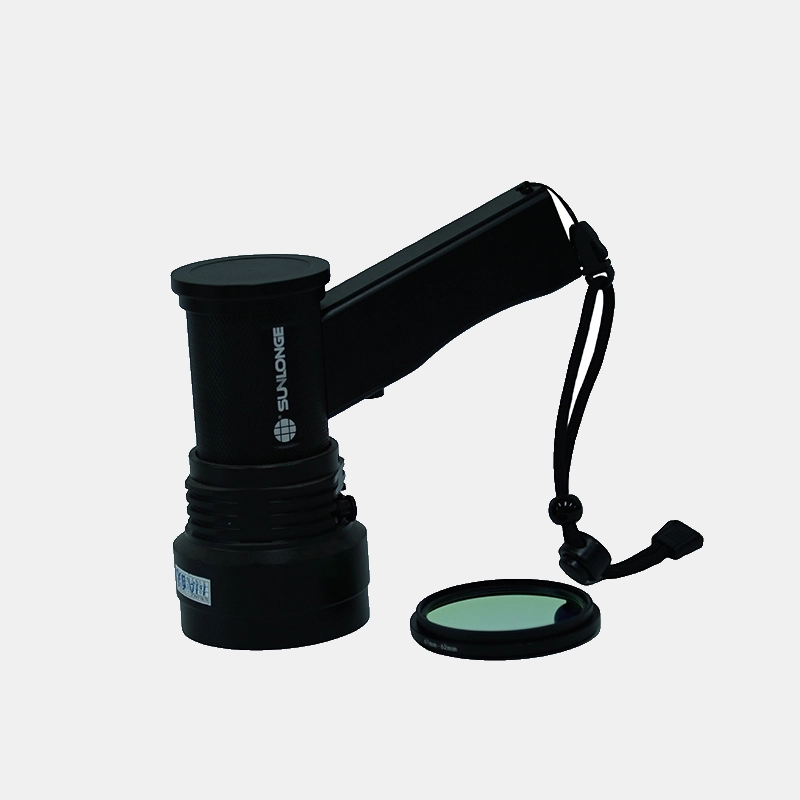
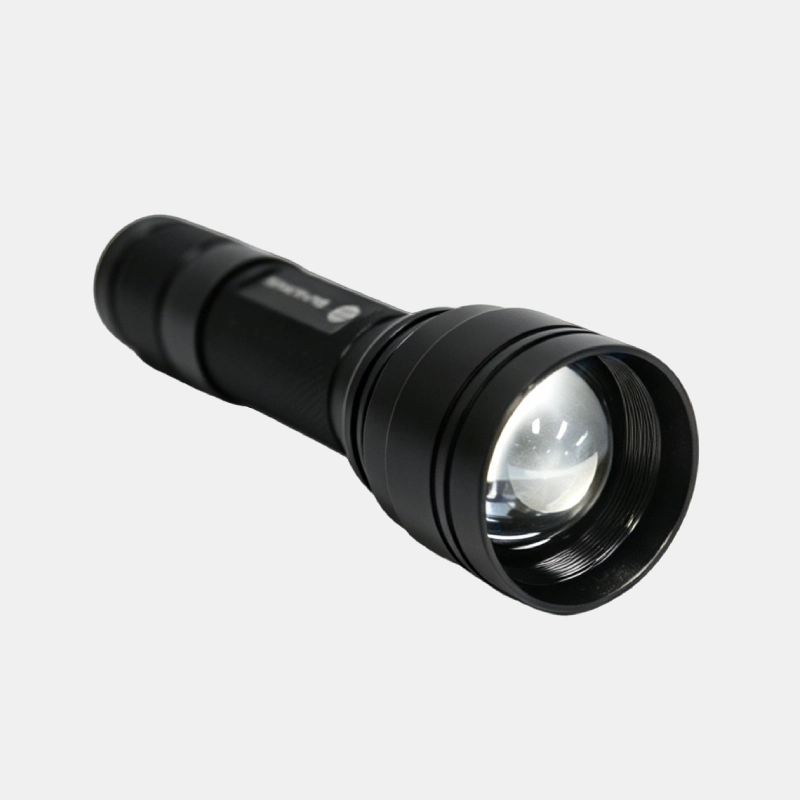
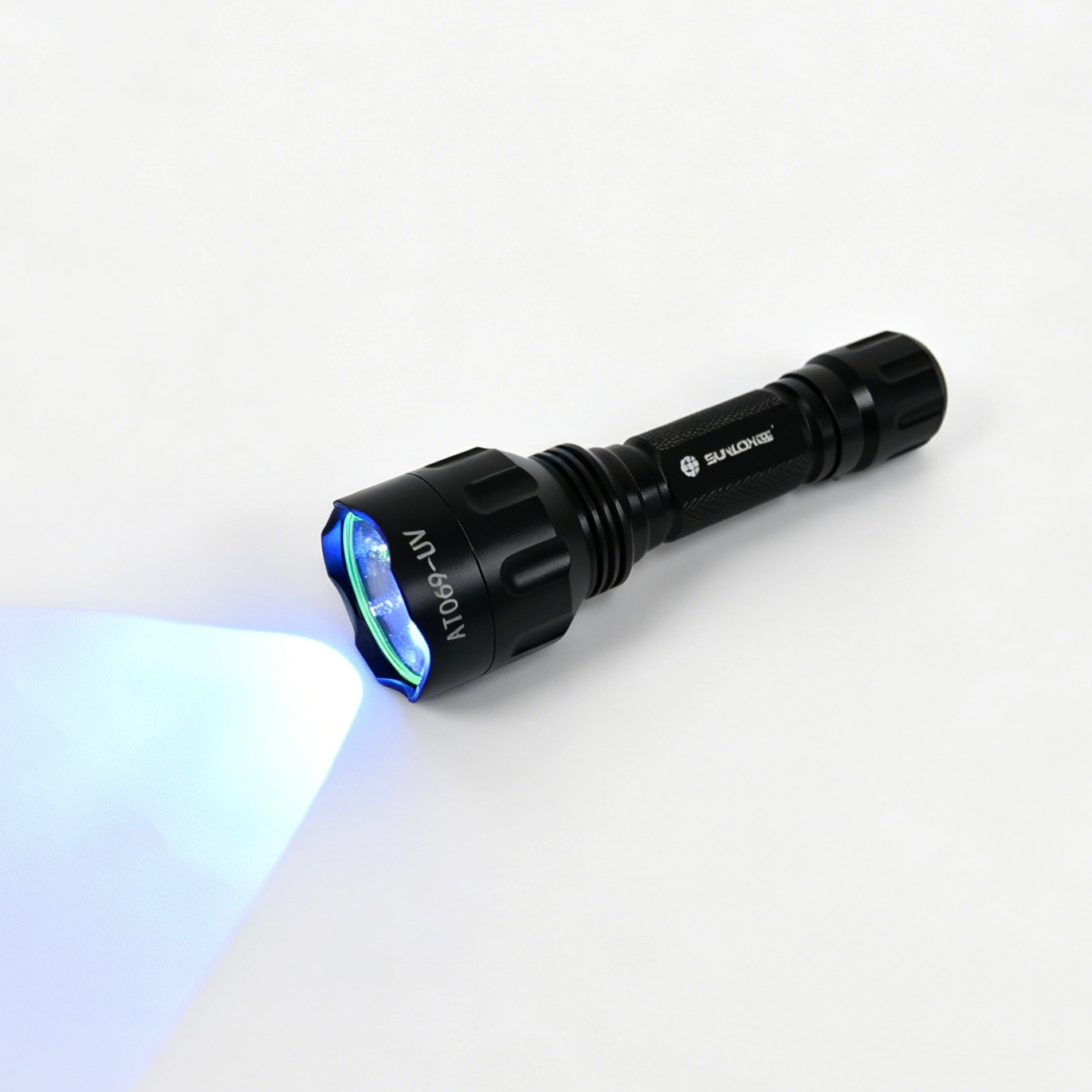
Fluorescent dye inspection injects a UV-reactive tracer dye into the system fluid. The dye circulates with the fluid and escapes at any leak point. A technician scans the system with a UV leak detection light and the dye glows bright yellow-green at every leak location, making even microscopic leaks immediately visible. This method is widely used in HVAC refrigerant systems, automotive engine compartments, and hydraulic equipment because it is fast, definitive, and leaves the dye in place for future re-inspection.
Tracer Gas Detection
Tracer gas methods introduce a safe, detectable gas — typically helium or a hydrogen-nitrogen mixture — into the system and use a sniffer probe to detect gas escaping at leak points. Helium leak detection achieves sensitivity down to 10^-11 Pa·m³/s, making it the most sensitive practical leak detection method available. It is the standard for high-vacuum systems, semiconductor process chambers, and aerospace component testing where even single-molecule leak paths are unacceptable.
Ultrasonic Detection
Similar in principle to acoustic detection but operating at frequencies above human hearing (typically 25-100 kHz), ultrasonic detection is effective for compressed air leaks, steam leaks, and electrical arcing detection. The high frequency gives it better directionality than audible-range acoustic methods, allowing a technician to scan a bank of pneumatic fittings and isolate which specific fitting is leaking.
How to Select the Right Leak Detection Method
There is no single “best” method. The right choice depends on four factors:
-
System type and operating conditions. Is it pressurized or open? Buried or exposed? Operating continuously or available for shutdown? These constraints eliminate some methods immediately.
-
What you need to know. Do you need to confirm whether a leak exists (pressure testing), find the leak location (acoustic or fluorescent dye), or assess the full extent of moisture damage (thermography)? Different questions require different tools.
-
Required sensitivity. A refrigerant system that can lose only a few ounces per year needs helium-based or fluorescent dye detection. A municipal water main that can tolerate a few gallons per hour can use acoustic detection effectively.
-
Operating budget and technician training. Infrared cameras require significant capital investment and operator training. Pressure test rigs are far cheaper but have narrower application. Most organizations build their leak detection solutions portfolio incrementally, starting with one core method and adding capabilities as the maintenance program matures.
A practical decision framework used by many industrial maintenance managers starts with the question: can the system be taken offline? If yes, pressure testing provides the most quantitative confirmation. If no, acoustic or fluorescent dye methods offer the best combination of sensitivity and location accuracy without interrupting operations. Thermography serves as a complementary broad-area screening tool that helps direct more targeted inspections.
FAQ
Q: Can one leak detection method handle all types of leaks in a single facility?
No single method covers every scenario. A manufacturing plant with compressed air lines, refrigerant systems, underground water mains, and building envelope concerns will need at least three different detection methods to address all leak types effectively. Facilities typically maintain pressure testing equipment for confirmation work, an infrared camera for building and insulation surveys, and either acoustic equipment or fluorescent dye kits for pinpointing leaks in operating systems.
Q: How often should industrial facilities perform leak detection inspections?
Frequency depends on system criticality and regulatory requirements. Refrigerant systems covered by EPA regulations in the United States must be checked at intervals ranging from annually to quarterly depending on system charge size. Compressed air systems, where leaks typically account for 20-30% of total air production in unmaintained plants, should be surveyed at least twice a year. Underground water distribution systems in municipalities are often surveyed on a 2-3 year rotation to proactively manage non-revenue water loss.
Q: What accuracy level can I expect from professional leak detection equipment compared to DIY methods?
Professional acoustic correlators can locate a leak within 6 inches in favorable conditions, while a DIY listening stick or stethoscope might only narrow it to within several feet at best. Professional infrared cameras with 640×480 resolution and 0.03°C sensitivity detect moisture patterns that consumer-grade thermal cameras (often 160×120 resolution with 0.1°C sensitivity) will miss entirely. Pressure decay instruments used in manufacturing quality control detect leaks below 10^-3 Pa·m³/s, while a simple gauge-and-wait test might miss leaks below 10^-1 Pa·m³/s. The gap in sensitivity, accuracy, and reliability between professional and consumer equipment is typically an order of magnitude or more.