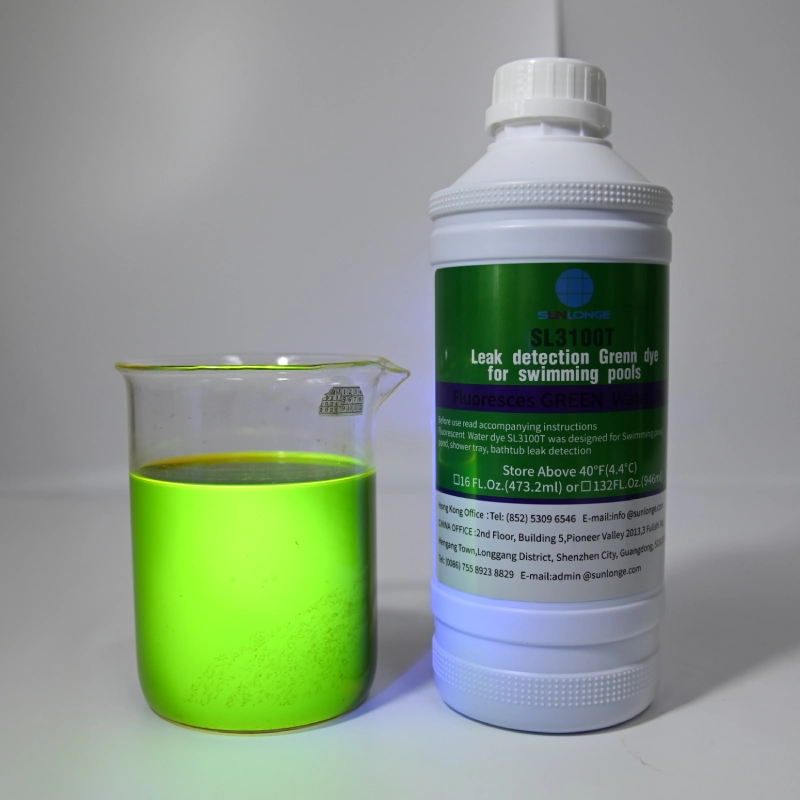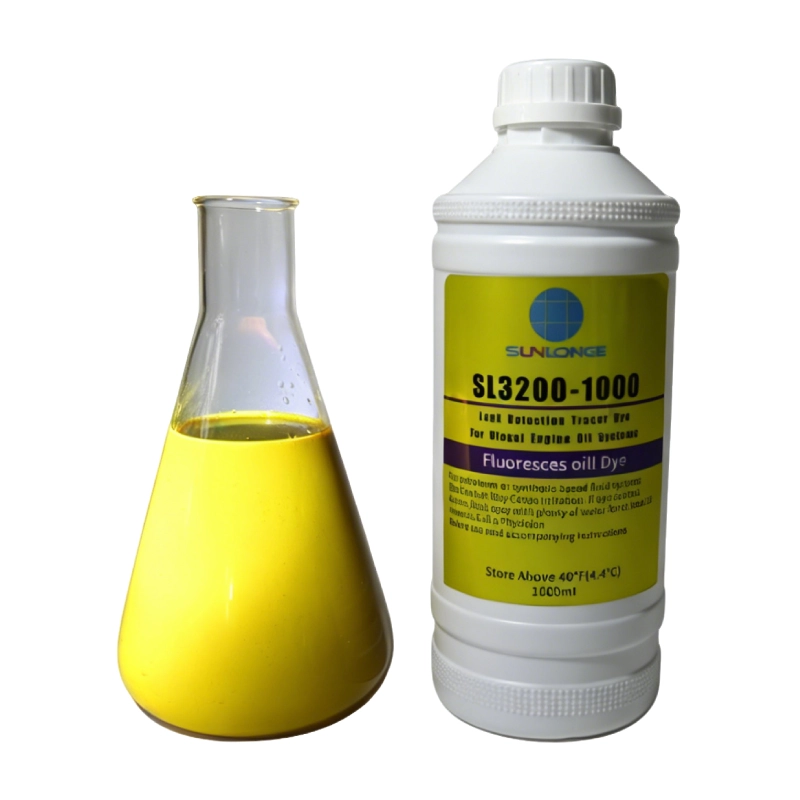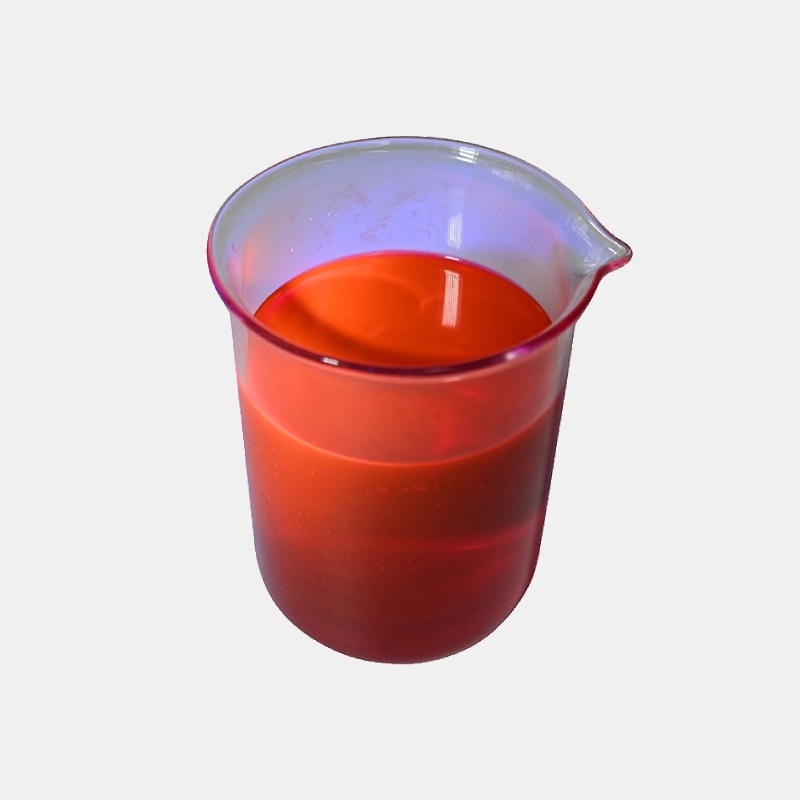
A hydraulic press at a metal fabrication plant loses roughly 15 gallons of hydraulic oil per month to a slow, invisible leak. The maintenance team has inspected every visible hose and fitting. The oil just keeps disappearing into a thin film that spreads across the machine frame and evaporates before anyone can trace it. This scenario plays out in engine rooms, transmission shops, heavy equipment depots, and fuel storage terminals every day.
Oil leaks are harder to find than water leaks. Water pools, drips, and stains. Oil spreads into a microscopically thin layer that follows surface tension along metal, rubber, and plastic. By the time a mechanic can see it, the leak has been active for days or weeks. In pressurized systems (engine oil galleries, hydraulic circuits, fuel injection lines) the fluid escapes as a fine mist that leaves almost no visible trace at the source. Traditional leak detection methods (visual inspection, chalk dust, wiping with a clean rag) catch obvious wet spots but miss the pinhole leaks, gasket weeps, and fitting seeps that account for most oil loss.
UV dye for oil is a fluorescent chemical additive that dissolves into petroleum-based and synthetic oils, circulates with the fluid through the system, and deposits at every leak point. When illuminated with a UV or blue light lamp, the dye fluoresces bright yellow-green at the exact location of the leak, turning an invisible oil film into an unmistakable visual signal. The dye remains chemically stable in the oil for the life of the fluid and does not alter lubricity, viscosity, or thermal stability when used at the correct concentration.
The value of this technology goes beyond finding a single leak. A maintenance team that uses UV dye for oil can inspect an entire hydraulic system, engine, or fuel circuit in one pass. Instead of isolating components one at a time and pressure-testing each section (a process that can take a full shift on a large machine), a technician injects the dye once, runs the system for a few minutes, and scans every joint, fitting, seal, and gasket with a UV lamp. Leaks that have been active for months show up in minutes. The time savings on a complex industrial system can be measured in days of labor per year.
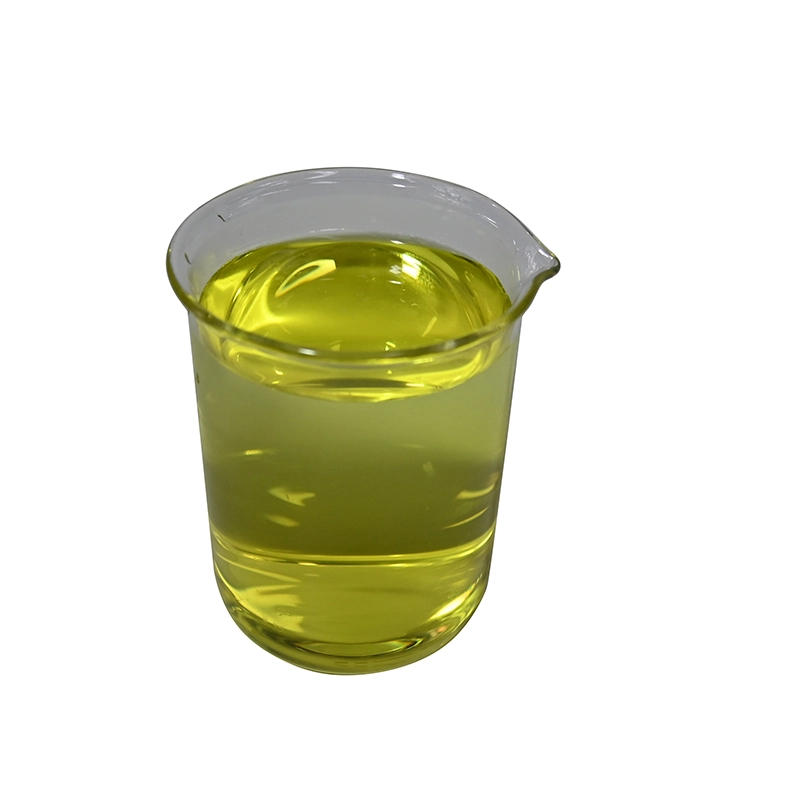
This article covers how oil-soluble UV dyes work at the chemical level, what types are available for different oil-based fluids, where they are used across industrial and automotive applications, how they compare to other leak detection methods, and what to look for when selecting a dye for a specific system.
How UV Dye for Oil Works: The Chemistry Behind Oil-Soluble Fluorescent Detection
UV dye for oil works because its molecules contain fluorescent chromophores that absorb ultraviolet or blue light and re-emit it as visible yellow-green light, while its oil-soluble carrier structure allows the dye to dissolve evenly in hydrocarbon-based fluids without separating, settling, or clogging narrow passages.
To understand why this matters, it helps to look at what makes oil leak detection difficult in the first place. Most industrial and automotive oils are amber to dark brown. A thin film of engine oil on a black cast-iron block or a dark hydraulic hose is effectively invisible under normal shop lighting. The oil spreads by capillary action along surfaces, so the visible wet spot may be several inches away from the actual leak source. In hot systems, the lighter fractions of the oil evaporate, leaving behind a varnish-like residue that does not look wet at all.
UV dye solves this by attaching a fluorescent tag to the oil molecules themselves. The dye molecules dissolve at the molecular level into the oil, forming a homogeneous solution. When the oil escapes through a crack, pinhole, or failed gasket, the dye molecules escape with it and deposit at the leak point along with the oil carrier. Unlike the oil, the dye molecules are engineered to stay behind at the surface after the oil’s lighter fractions evaporate. A technician can inject the dye, run the system for 10 to 30 minutes (depending on system volume and circulation rate), and then scan the entire circuit with a UV lamp. The dye fluoresces at 500 to 540 nanometers, which is the yellow-green region where the human eye has its peak sensitivity in low-light conditions.
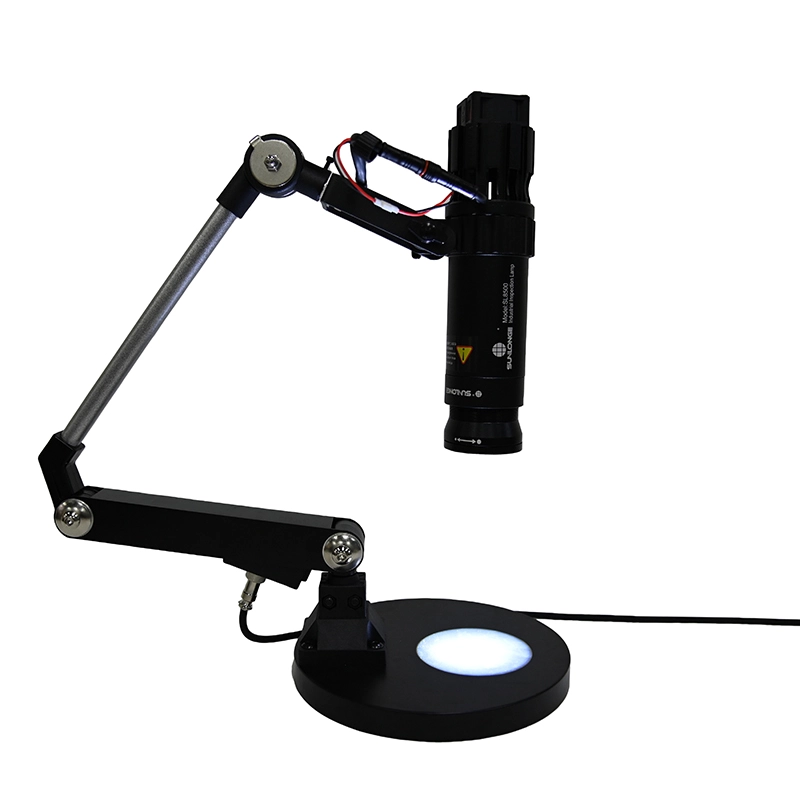
The chemistry has to satisfy several constraints at once. The dye must be fully miscible in oil across the operating temperature range (oil runs cold at startup and reaches 100 to 150°C in normal operation, and far higher at localized hot spots like turbocharger bearings). It must not react with oil additives including anti-wear agents (ZDDP), detergents, dispersants, oxidation inhibitors, or viscosity index improvers. It must not form deposits on fine clearances such as hydraulic spool valves or fuel injector pintles. And it must stay fluorescent for the life of the oil fill, which can be thousands of operating hours in an industrial gearbox or hydraulic reservoir.
The best UV dye for oil formulations use perylene or naphthalimide-based fluorophores attached to hydrocarbon-soluble side chains. These dyes have quantum yields above 0.8, meaning more than 80% of the absorbed UV energy is re-emitted as visible light. A technician scanning with a 365 nm UV lamp can see the glow from a pinhole leak even under moderate shop lighting, which is a practical advantage that eliminates the need to black out the inspection area.
Types of Oil-Soluble UV Dyes
Oil-soluble UV dyes come in distinct formulations matched to the base oil chemistry and operating conditions of the target system. Using the wrong type (for example, a general-purpose engine oil dye in a synthetic hydraulic fluid) leads to poor solubility, reduced fluorescence, or additive incompatibility.
The table below summarizes the main types of oil-soluble UV dyes and their typical applications.
| Dye Type | Base Fluid Compatibility | Typical Operating Temperature | Key Application | Detection Sensitivity |
|---|---|---|---|---|
| Engine Oil Dye | Mineral oil, semi-synthetic, full synthetic | -20°C to 180°C | Automotive and diesel engines, generators | High (fluoresces at 1:500 dilution) |
| Hydraulic Oil Dye | Mineral hydraulic oil, synthetic ester, polyalphaolefin (PAO) | -40°C to 150°C | Industrial hydraulic presses, injection molding machines, aircraft hydraulics | Very high (fluoresces at 1:1000 dilution) |
| Transmission Fluid Dye | ATF, CVT fluid, DCT fluid | -30°C to 160°C | Automatic transmissions, dual-clutch gearboxes | High |
| Fuel System Dye | Gasoline, diesel, biodiesel blends | -40°C to 90°C | Fuel tanks, lines, injectors, transfer pumps | Moderate (fuel volatility reduces dwell time) |
| Gear and Compressor Oil Dye | Mineral gear oil, PAO, PAG | -10°C to 200°C | Industrial gearboxes, rotary screw compressors, turbine oil systems | High |
| Refrigeration Oil Dye | Mineral oil, alkylbenzene, POE, PVE | -40°C to 175°C | Refrigerant-lubricated circuits using oil-soluble dye | High (CO₂ systems require special formulations) |
Engine oil dyes are the most widely used type. They are formulated to stay soluble in the full range of modern engine oils from conventional SAE 5W-20 to full synthetic 0W-40, across a temperature range that starts at a cold winter crank and goes up to turbocharger bearing temperatures that can exceed 250°C at the hot spots. The dye must survive the oxidation and nitration environment inside a running engine without breaking down or losing fluorescence. Most engine oil dyes are dosed at one-quarter to one-half ounce per quart of oil capacity, which produces fluorescence that is visible under a 365 nm or 395 nm UV lamp.
Hydraulic oil dyes are a different formulation challenge. Hydraulic systems in industrial equipment hold anywhere from 20 to over 2,000 gallons of fluid. The dye must be detectable at very low concentrations because injecting enough dye to saturate a 1,500-gallon reservoir would be both expensive and needlessly invasive. High-sensitivity hydraulic dyes use fluorophores with absorption cross-sections optimized for the 365 nm peak of most industrial UV inspection lamps. At the recommended dose of one ounce per 50 gallons, the dye is invisible to the naked eye under normal lighting but glows brightly under UV. This is important because maintenance teams do not want the dye to visibly discolor the hydraulic oil in the sight glass.
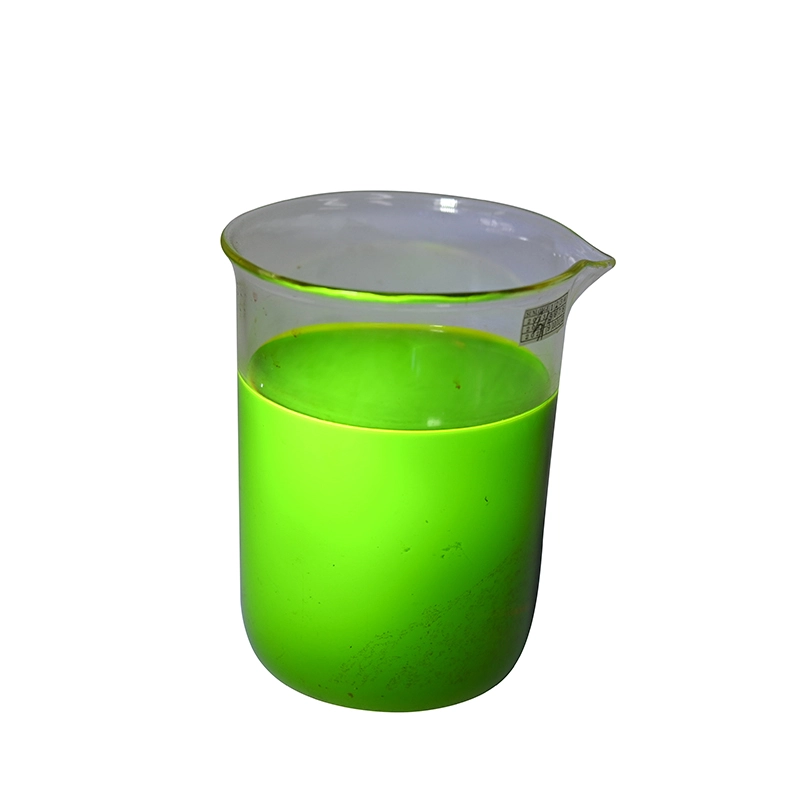
Fuel system dyes have to handle a different set of problems. Gasoline and diesel are low-viscosity solvents that evaporate quickly at the leak point, so the dye has very little dwell time to deposit at the leak before the carrier fluid disappears. Fuel dyes are formulated with higher molecular weight carriers that leave a sticky fluorescent residue after the fuel evaporates. The tradeoff is that fuel dyes have lower solubility limits, typically 1:200 to 1:500, compared to 1:1000 or better for hydraulic dyes. They are also subject to the temperature limits of fuel systems; diesel injection systems can reach 80 to 100°C, and the dye must not decompose or form deposits on injector nozzles at these temperatures.
Across all types, modern fluorescent leak detection dyes have converged on co-solvent-free formulations. Older dyes used solvent carriers (acetone, toluene, xylene) to keep the fluorophore in solution during storage. These solvents could swell seals, dilute the oil’s viscosity, and in the worst case flash off inside hot systems and leave behind insoluble dye particles. The current generation of dyes suspends the fluorophore directly in an oil-compatible carrier that contributes negligible volume to the overall fluid charge.
Key Industrial Applications of UV Dye for Oil
UV dye for oil is used in automotive service, heavy equipment maintenance, industrial manufacturing, marine engineering, and aviation to find leaks that would otherwise require component disassembly or hours of trial-and-error inspection.
The automotive application is the largest by volume. A shop diagnosing an oil leak on a modern vehicle faces an engine bay where the oil pan, valve cover gaskets, front and rear main seals, timing cover, turbocharger oil lines, and oil cooler lines are all buried under intake manifolds, wiring harnesses, and plastic covers. The mechanic injects a fluorescent UV dye for engine oil into the crankcase, runs the engine for 15 minutes, and scans with a UV lamp. The exact leak point shows up as a bright spot at the gasket edge, bolt hole, or seal surface. The mechanic spends minutes instead of hours isolating the leak, and the customer avoids labor charges for exploratory disassembly. The same approach works for transmission fluid leaks (ATF, CVT, DCT fluids), power steering leaks, and differential gear oil leaks.
Heavy equipment and construction machinery present a harder version of the same problem. An excavator, wheel loader, or bulldozer has dozens of hydraulic cylinders, swivel joints, rotary unions, and hose assemblies. A single machine can have over 200 potential leak points in its hydraulic circuit. When a leak develops, the oil sprays as a fine mist that coats everything nearby. Traditional diagnosis involves wiping down every joint and watching for fresh oil, a process that can take two mechanics an entire shift. With UV dye, they inject the dye into the hydraulic reservoir, operate the machine through its full range of motion for 30 minutes, and scan every joint in 20 minutes. The leaking joint fluoresces, the surrounding mist-coated surfaces do not (the mist has no dye left behind after evaporation), and the team knows exactly which hose or seal to replace.

Marine applications add salt water and confined spaces to the equation. A vessel’s engine room contains main propulsion engines, generator sets, hydraulic steering systems, fuel transfer pumps, and bilge systems, all packed into a space where access is tight and ventilation is limited. An oil leak in a main engine lube oil system can release oil into the bilge, which triggers environmental reporting requirements under MARPOL. Finding that leak in a cramped engine room with a hot engine running is difficult by any method other than UV dye. The dye is injected into the lube oil circuit, the engine runs at normal operating load, and an inspection with a UV lamp finds the leak. In fuel systems specifically, UV dye helps differentiate between a fuel leak and a lube oil leak in the bilge, which matters because the two fluids trigger different regulatory responses.

Industrial manufacturing uses UV dye for oil in hydraulic presses, injection molding machines, die-casting equipment, and metal stamping lines. These machines run at high pressures (2,500 to 5,000 psi in hydraulic circuits) with oil that cycles from ambient to 120 to 150°F in normal operation. A pinhead leak at these pressures creates an oil mist that is invisible to the naked eye but accumulates over a shift into puddles that create slip hazards and fire risks. UV dye injection lets the maintenance team find these leaks during a scheduled inspection instead of waiting for the puddle to appear.
Aviation applications are the most demanding. Aircraft hydraulic systems operate at 3,000 to 5,000 psi using Skydrol or other fire-resistant phosphate ester fluids. The dye used in these systems must be compatible with phosphate ester chemistry (not the hydrocarbon chemistry of most oil dyes), must fluoresce brightly at very low concentrations (aircraft hydraulic reservoirs are small relative to the system volume), and must meet aerospace material specifications. Aviation UV dyes are a specialized subcategory that is not interchangeable with industrial or automotive dyes.
UV Dye for Oil vs. Other Leak Detection Methods
UV dye for oil outperforms electronic sniffers, pressure decay testing, and visual inspection for locating the exact physical position of a leak, but each method has a role in a comprehensive diagnostic workflow.
The table below compares the main leak detection methods for oil-based systems on five dimensions that matter to maintenance teams.
| Method | Locates Exact Leak Point | Requires System Shutdown | Works on Non-Pressurized Leaks | Equipment Cost | Time to Result |
|---|---|---|---|---|---|
| UV Dye + Lamp | Yes (pinpoints to millimeter) | No (run system, then inspect) | Yes (dye deposits at all leak types) | Moderate (lamp + dye kit) | 15 to 45 minutes |
| Electronic Sniffer | Approximate (detects vapor, not liquid) | No | No (needs vapor concentration) | Moderate to high | 5 to 15 minutes for scan |
| Pressure Decay Testing | No (only confirms a leak exists) | Yes (system must be isolated and pressurized) | No | Low to moderate (pressure gauge and fittings) | 30 minutes to several hours |
| Bubble Solution / Soap Test | Yes (for accessible surfaces) | Depends (can test under pressure) | No (requires internal pressure to form bubbles) | Very low (spray bottle) | 5 to 15 minutes |
| Visual / Chalk Dust | Sometimes (if oil film is thick enough) | No | Yes | None | Hours to days |
| Ultrasonic Detection | Approximate (detects turbulent flow noise) | No | No (needs turbulent flow at leak) | High | 10 to 30 minutes |
UV dye for oil has two advantages that no other method fully replicates. First, it records the leak. The dye stays at the leak point after the system is shut down. A maintenance team can inject dye on Monday, run the machine all week, and inspect on Friday. Every leak that occurred during the week will still be visible. Pressure decay testing only tells you that a leak exists somewhere in the isolated circuit. An electronic sniffer finds the general area but not the exact point. Second, UV dye works on weeps and seeps that do not produce enough flow to create ultrasonic noise or a measurable pressure drop. A gasket that weeps a few drops per hour can lose gallons over a year but will not trigger a pressure decay alarm or show bubbles.
The practical workflow for field service often combines methods. A technician uses an electronic sniffer to scan the general area and identify which circuit is leaking. Once the circuit is identified, UV dye is injected and the system operated to circulate the dye through all branches. A UV lamp scan then finds the exact leak point. This two-step process avoids the blind injection of dye into multiple circuits and reduces total diagnostic time on complex equipment.
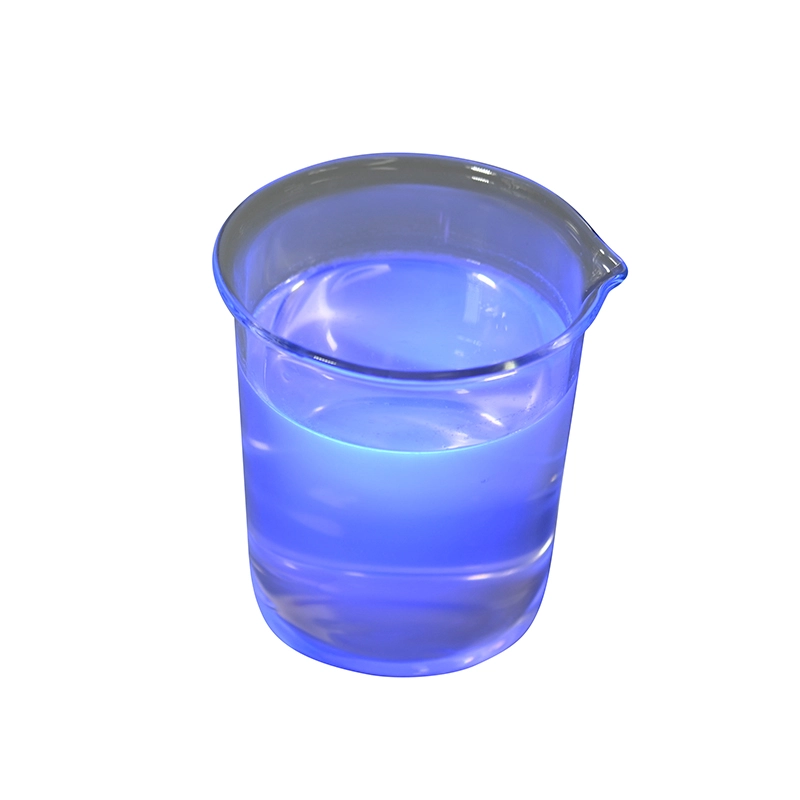
Within a broader suite of leak detection solutions, UV dye fills the role that no other tool covers: turning every leak point into a visual signal that persists after the system cools down and the pressure bleeds off.
How to Choose the Right UV Dye for Your Oil System
Start with the oil type and operating temperature. Match the dye carrier chemistry to the base oil (mineral, PAO, ester, PAG, phosphate ester). Check for compatibility with the system’s seal materials. Calculate the correct dosage based on total fluid capacity.
Choosing the wrong dye is worse than choosing no dye at all. A dye that precipitates out of solution in a synthetic hydraulic oil can clog servo valves with clearances measured in microns. A dye that is not rated for the system’s maximum operating temperature can thermally decompose and lose fluorescence before the inspection even starts. A dye that reacts with anti-wear additives can reduce the oil’s load-carrying capacity and cause bearing damage.
The selection process follows four steps.
Step 1: Identify the base oil chemistry. Look at the oil specification sheet or the oil container label. If the oil is a mineral-based hydraulic oil (ISO VG 32, 46, or 68), most general-purpose oil dyes will work. If it is a synthetic (PAO, diester, polyol ester, PAG, phosphate ester), you need a dye specifically formulated for that base stock. Mixing a mineral-oil dye into a phosphate ester fluid (used in aircraft and some industrial systems) will produce a visible phase separation. The dye will float as insoluble droplets and never reach the leak points.
Step 2: Confirm the operating temperature range. The dye must remain fully dissolved and chemically stable at the lowest cold-start temperature and the highest hot-spot temperature the system will experience. A marine diesel engine in the North Atlantic in winter sees lube oil temperatures near 0°C at startup, and the same engine at full load sees localized bearing temperatures approaching 200°C. Many dyes specify a continuous-use temperature range; check that your system operates entirely within that range.
Step 3: Verify seal and elastomer compatibility. Most modern co-solvent-free dyes are compatible with standard oil system elastomers (NBR, HNBR, FKM, PTFE). If the system contains less common materials (EPDM in some brake fluid applications, silicone in high-temperature seals), request a compatibility statement from the dye manufacturer. Sealed-tube aging tests at elevated temperature are the standard method for verifying compatibility. The dye-lubricant mixture is heated with a sample of the seal material for a specified period (typically 168 hours at 100 to 150°C), and the seal is checked for swelling, hardening, or weight change.
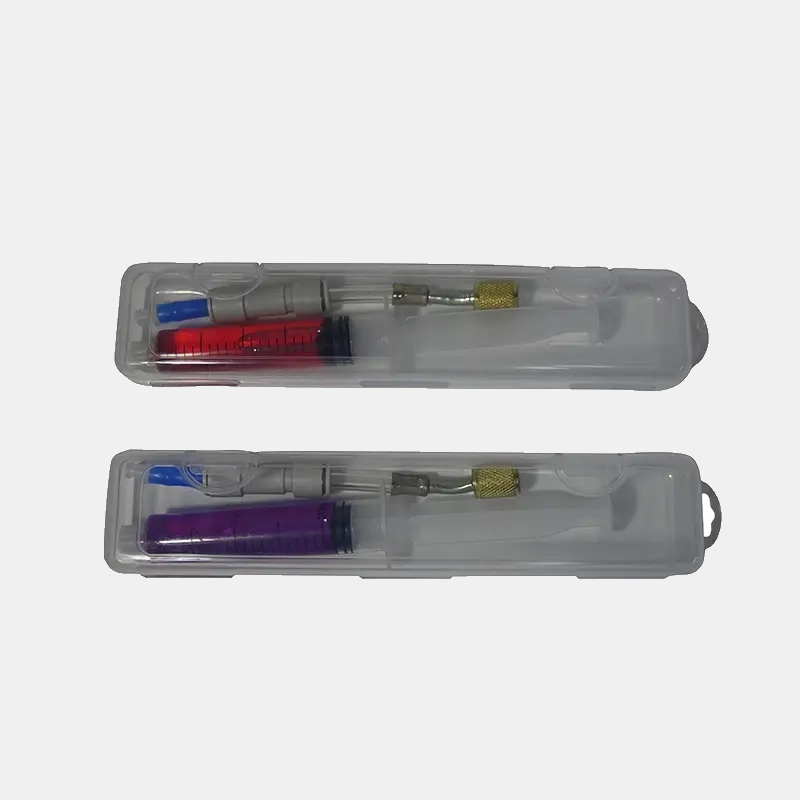
Step 4: Calculate the dosage. Overdosing UV dye wastes product and, at extreme levels, can alter the oil’s viscosity or additive balance. Underdosing produces fluorescence that is too dim to see under ambient shop lighting. The standard dosage for oil-soluble dyes is one-quarter to one-half ounce per quart of oil capacity for engine and small hydraulic systems, and one ounce per 10 to 50 gallons for large reservoirs. Read the manufacturer’s dosage chart for the specific product. For systems with very large oil volumes (over 500 gallons), some manufacturers offer concentrated dyes that allow a lower injection volume.
A practical tip: after injecting the dye, run the system for at least 10 to 15 minutes for small circuits and 30 to 60 minutes for large reservoirs. The dye needs time to circulate through every branch of the system. In a complex hydraulic circuit with multiple valve blocks and cylinder branches, cycling each actuator through its full stroke ensures that every line segment sees dyed oil.
Common Mistakes When Using UV Dye for Oil
The most frequent mistakes are injecting too much dye, choosing a dye that is not compatible with the base oil chemistry, not allowing enough circulation time for the dye to reach the leak point, and using a UV lamp with the wrong wavelength for the dye’s excitation spectrum.
Overdosing is the most common error. A technician who cannot see the fluorescence immediately may assume the dye is too weak and add more. The real problem is usually that the dye has not circulated to the leak point yet, or the UV lamp wavelength is mismatched. Adding more dye increases the chemical load in the oil without solving the inspection problem. If the first inspection pass does not show fluorescence, wait another 15 minutes and scan again before adding more dye.
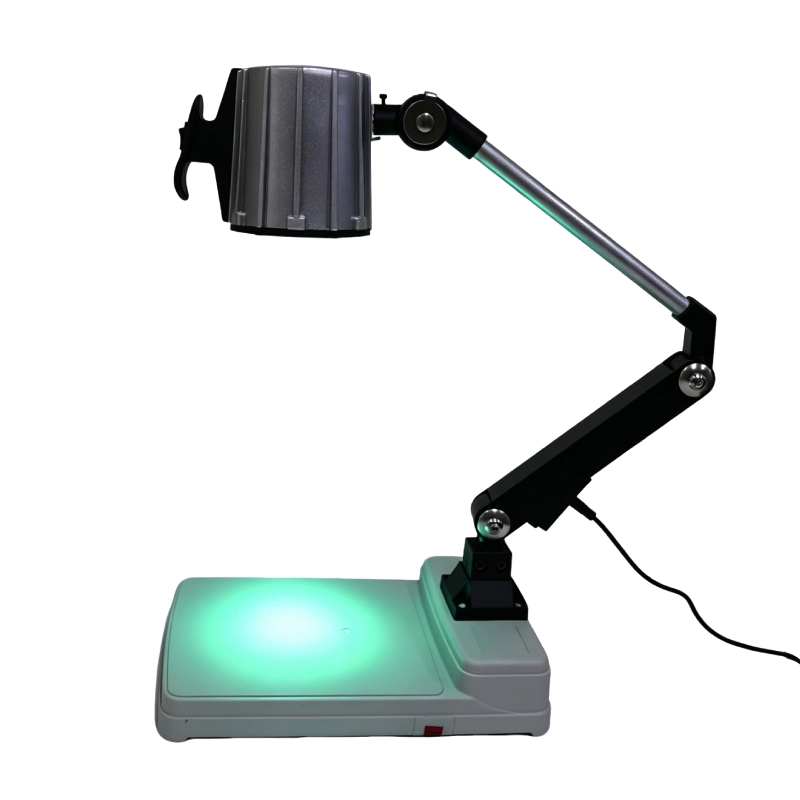
Wavelength mismatch between the UV lamp and the dye is a subtler problem. Most industrial UV dyes are excited by UV-A light in the 365 to 370 nm range. Some inspection lamps emit 395 nm light, which is closer to the visible spectrum. Many dyes have lower absorption at 395 nm, resulting in dimmer fluorescence. A dye that would glow brightly under 365 nm light may be barely visible under 395 nm. Before buying a lamp and dye kit, check that the lamp’s emission peak matches the dye’s excitation peak. This data is available in the manufacturer’s technical data sheet.
Another mistake is using an automotive-grade dye in an industrial hydraulic system without checking for additive interactions. Automotive engine oil dyes are tested against engine oil additive packages (ZDDP, calcium sulfonate detergents, succinimide dispersants). Industrial hydraulic oils use different additive chemistries, often zinc-free for compatibility with high-pressure pumps. A dye that works in engine oil may precipitate or lose fluorescence in a zinc-free hydraulic fluid. When moving dye from automotive to industrial applications, request the manufacturer’s compatibility table or run a bench test: mix the dye with a small sample of the target oil at the intended concentration, heat it to operating temperature, and check for clarity and fluorescence after 24 hours.
Not letting the system reach operating temperature is a mistake specific to cold-climate operations. Oil viscosity is much higher at low temperatures, and circulation through narrow passages is slower. If the system is cold, the dye may not reach all leak points within a reasonable inspection window. Run the system until it reaches normal operating temperature before beginning the UV lamp scan.
For automotive service specifically, a technician using UV dye for auto service should also check that the dye is compatible with the vehicle’s oil filter media. Some older paper-element filters can adsorb a fraction of the dye from the oil, reducing the effective concentration in the circuit. This effect is small with modern synthetic filter media but worth verifying on vintage or specialty vehicles.
Safety, Compatibility, and Environmental Considerations
UV dyes for oil are low-hazard chemicals when handled according to the safety data sheet, but they introduce a foreign substance into the oil circuit, so compatibility testing, waste oil disposal compliance, and seal material verification are non-negotiable steps before injection.
The safety profile of modern UV dyes is generally straightforward. The dyes are non-flammable at the concentrations used (typically less than 5% dye by volume in the oil charge), and they do not produce hazardous decomposition products at normal system operating temperatures. Standard shop safety practices apply: wear nitrile gloves when handling concentrated dye, avoid eye contact, and dispose of dye-contaminated rags in accordance with local regulations for oil-soaked waste.
The environmental dimension matters more than the immediate safety one. Oil that contains UV dye must be handled as used oil under the same waste oil regulations that apply to the undyed fluid. The dye itself does not change the hazardous waste classification, but the fact that it is dissolved in oil that may contain heavy metals and combustion byproducts means the waste oil handling requirements do not change. In most jurisdictions, used engine oil and hydraulic oil are managed under the same waste codes regardless of dye content. In the European Union, the Waste Framework Directive classifies used oils as hazardous waste, and the presence of UV dye at parts-per-thousand concentrations does not alter this classification.
Seal and elastomer compatibility is the most important technical consideration. The seal materials in an oil system are chosen to resist the base oil and its additives. Adding a dye molecule that is foreign to this chemistry (even at low concentrations) can cause swelling, hardening, or chemical attack of certain elastomers. The most commonly affected materials are low-acrylonitrile NBR (nitrile) compounds used in older equipment, and some silicone-based sealants that can absorb solvent carriers if present in the dye formulation. The solution is straightforward: use co-solvent-free dyes from manufacturers that publish elastomer compatibility data, and avoid dyes with aggressive carriers (acetone, MEK, toluene).
A practical test that maintenance teams can run before committing to a new dye in a large system: take a small sample of the system’s oil, mix it with the dye at the intended concentration, add a piece of the system’s seal or gasket material (if a spare is available), seal the container, and heat it to the system’s maximum operating temperature for 72 hours. Check the seal for visible changes and measure its Shore hardness before and after the test. A change of more than 5 points indicates incompatibility, and the dye should not be used in that system.
Biodegradability is an emerging requirement, particularly in Europe and in applications where oil leaks can reach soil or water. Some manufacturers now offer readily biodegradable UV dye formulations based on ester carriers that break down in the environment within 28 days under OECD 301B test conditions. These dyes are more expensive than conventional formulations but eliminate the environmental liability of a dye-containing oil spill reaching groundwater.
FAQ
Can UV dye for oil be used in any type of oil?
No. Oil-soluble UV dyes are formulated for specific base oil chemistries. A dye designed for mineral oil may not dissolve in synthetic ester-based or phosphate ester fluids. Mixing incompatible dye and oil chemistries results in phase separation, precipitation, or complete loss of fluorescence. Always match the dye type to the base oil chemistry listed on the oil’s specification sheet.
How long does UV dye remain effective after injection?
The dye remains fluorescent for the full service life of the oil, typically 5,000 to 10,000 operating hours in industrial hydraulic and gear systems, and 3,000 to 7,500 miles in automotive engine oil applications. High-temperature operation above the dye’s rated limit shortens this duration by accelerating thermal degradation of the fluorophore. The dye does not filter out under normal conditions because it is dissolved at the molecular level and passes through standard oil filters (which capture particles down to 5 to 20 microns but not dissolved molecules).
Does UV dye damage engine seals or gaskets over time?
Modern co-solvent-free UV dyes do not damage seals, gaskets, or O-rings when used at the correct dosage. The dye molecules are chemically inert toward standard oil system elastomers including NBR, HNBR, FKM (Viton), and PTFE. Older dye formulations that used solvent carriers (acetone, toluene) could cause seal swelling, but these formulations are largely phased out of professional-grade products. For systems with uncommon seal materials such as EPDM or FFKM (perfluoroelastomer), request a compatibility certificate from the dye manufacturer before use.
What is the difference between UV dye for oil and UV dye for water-based systems?
Oil-soluble dyes use hydrocarbon-based carrier molecules to dissolve in oil. Water-soluble dyes use polar carrier molecules (often glycol-based) to dissolve in water. The two types are chemically incompatible across fluid types. An oil-soluble dye injected into a water-glycol circuit will float to the surface as an insoluble layer and produce no fluorescence at leak points. Conversely, a water-based dye injected into oil will settle or form an emulsion instead of dissolving. The packaging and labeling of the two types is distinct, but it is worth double-checking before injection.